If you’re planning your wedding, you’ve probably wondered whether your photographer should visit your venue before the big day. Maybe you’ve read that it’s essential, or perhaps you’re considering two photographers and one of them has already worked at your venue while the other hasn’t. Does that really make a difference? And should it influence your decision?
My honest answer is that visiting a wedding venue beforehand can be helpful, but it’s rarely essential. There are situations where I would absolutely recommend it, particularly when a wedding involves complicated logistics or an unusual location. But after more than ten years working as a wedding photographer and photographing over 300 weddings, I can tell you that knowing a venue is only a small part of what goes into creating beautiful wedding photographs.
What matters much more is understanding light, anticipating moments, knowing how weddings work, and being comfortable adapting when things don’t go exactly as planned. Because, believe me, no matter how carefully you organize your wedding, there will always be a few surprises along the way.
Let me explain why I feel this way, when I think a venue visit is worth considering, and what I believe you should actually look for when choosing your wedding photographer.
Does a wedding photographer really need to visit the venue beforehand?
Let’s start with something important: a good wedding photographer should be able to create beautiful photographs in a location they’ve never visited before.
That doesn’t mean preparation isn’t important. Quite the opposite. Knowing the wedding schedule, understanding how the different spaces will be used, and having a general idea of the venue can make everything run more smoothly. But there’s a big difference between preparing for a wedding and needing to physically visit the venue weeks or months beforehand.
Think about destination weddings, for example. If you’re an American couple getting married in Barcelona, the Costa Brava, Tuscany, or the South of France, your photographer might not live anywhere near your venue. And that doesn’t automatically make them less qualified to photograph your wedding. In fact, being able to work confidently in unfamiliar locations is an important part of destination wedding photography.
Personally, I believe a photographer’s ability to observe, understand, and adapt to a location is far more valuable than simply knowing where the ceremony or cocktail hour will take place.
You can visit a venue ten times and still struggle when the light is difficult. And you can arrive somewhere for the first time, take a few minutes to understand the surroundings, and discover incredible photographic opportunities.
The difference is experience.
Why knowing the venue isn’t the same as understanding photography
One thing I’ve learned over the years is that a beautiful location doesn’t automatically produce beautiful photographs.
I’ve seen incredible wedding venues with stunning gardens, elegant architecture, and spectacular views. But those same locations can become surprisingly challenging to photograph depending on the time of day, the position of the sun, or the weather.
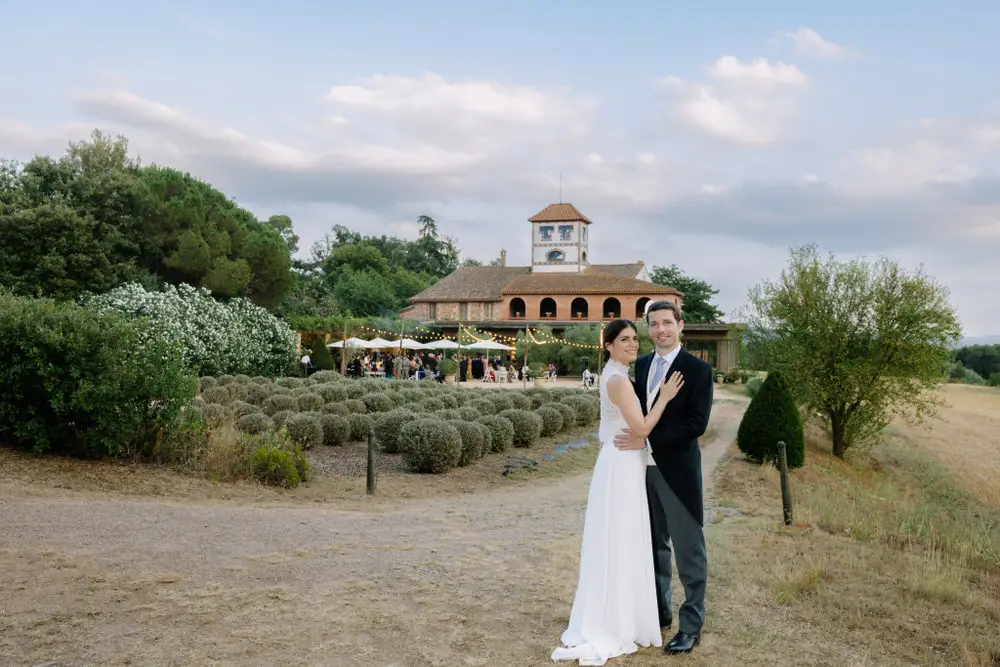
Imagine a ceremony taking place in the courtyard of a Mediterranean villa. The space might look perfect in photographs you’ve seen online, with warm stone walls, beautiful greenery, and an open view of the sky. But if the ceremony begins at 3 p.m. in the middle of July, the sunlight could be extremely intense, creating hard shadows across people’s faces.
Now imagine that same courtyard at 6:30 p.m., when the sun is lower and the light is softer. The photographic possibilities could be completely different, even though nothing about the location itself has changed.
This is why I pay so much attention to light. As a photographer, understanding where it’s coming from, how it’s interacting with the surroundings, and how it’s likely to change throughout the day is essential.
Of course, visiting a venue beforehand can help you identify interesting places. But those places may look completely different when the wedding actually happens.
Knowing how to work with light is far more important than memorizing the best-looking corners of a venue.
And there’s another important point: your wedding isn’t a photography production. It’s a real celebration, with real emotions and moments that aren’t going to wait for the photographer to find the perfect lighting conditions.
Sometimes the most meaningful photograph happens in the least photogenic corner of a room. A good photographer knows how to recognize that moment and make the best possible photograph without interrupting what’s happening.
When I think visiting a wedding venue beforehand is a good idea
Although I don’t believe a venue visit is necessary for every wedding, there are situations where it can make a genuine difference.
When the venue has complicated logistics
Some weddings take place across several different locations. You might get ready at a hotel, have your ceremony in a church, organize your cocktail hour in a garden, and celebrate the reception in another building.
In these situations, understanding the distances between locations and the time needed to move from one space to another becomes especially important.
The same applies to large estates, historic buildings with restricted access, or venues where moving between different areas isn’t particularly straightforward.
A scouting visit may help identify potential problems, but often a conversation with the wedding planner or venue coordinator can provide the information needed. Floor plans, detailed schedules, and photographs of the spaces can also be incredibly useful.
The important thing is making sure everyone understands the logistics before the wedding day.
When the ceremony takes place somewhere unusual
Not every wedding happens in a traditional venue.
Some couples choose private properties, secluded beaches, mountain locations, or outdoor spaces that aren’t normally used for weddings. Others organize intimate ceremonies in places with limited access or very specific restrictions.
In these circumstances, visiting the location beforehand can be particularly helpful.
For example, if a ceremony takes place on a cliff overlooking the Mediterranean, I would want to understand where guests will be seated, how the couple will enter, whether photographers can move around safely, and where the sun will be during the ceremony.
If the location is difficult to access or there are restrictions that could affect the photographs, preparing in advance becomes much more important.
When the schedule leaves very little room for flexibility
Some weddings have extremely tight schedules.
Perhaps the couple has only fifteen minutes available for portraits. Maybe the venue is very large, or the ceremony finishes shortly before sunset. Sometimes there are restrictions on when certain spaces can be used.
In these situations, knowing exactly where to go can save valuable time.
However, I would still try to avoid turning the wedding into a race between photography locations. A carefully planned schedule is useful, but I always believe it’s better to leave a little breathing room than to organize every minute around photographs.
After all, you’re getting married. You should have time to enjoy it.
What I do to prepare for a wedding at a venue I haven’t visited
For me, preparation begins long before I pick up my cameras on the wedding morning.
The first thing I want to understand is how the day is going to unfold. Where will each person get ready? What time does the ceremony begin? Will the cocktail hour take place outdoors? When is dinner scheduled? Are there any particularly important moments or traditions I should know about?
Those details help me anticipate how the different parts of the day will connect and where I may need to be at specific times.
I also like to familiarize myself with the venue. Photographs, maps, satellite views, and information from the venue itself can help me understand the layout and surroundings. When a wedding planner is involved, they’re often a particularly valuable source of information because they know the practical details of the event.
Another important part of my preparation is checking the sunset time.
This is especially relevant for outdoor weddings in Spain and other Mediterranean destinations, where the light can change dramatically throughout the afternoon and evening. Knowing when the sun will set helps me think about the best opportunities for couple portraits without interfering too much with the celebration.
Of course, no amount of preparation can tell you exactly what the weather or lighting conditions will be on the wedding day.
That’s why I always consider the actual conditions when I arrive. I look at the light, the backgrounds, the spaces being used, and how everything has been arranged. Even if I’ve photographed a wedding at the same venue before, I wouldn’t automatically assume the conditions will be identical.
Every wedding is different, and I think the photographs should reflect that.
The importance of arriving early on the wedding day
One of the most useful things a photographer can do is allow enough time to familiarize themselves with the surroundings before the key moments begin.
A short look around the venue can reveal information that wouldn’t necessarily be obvious from photographs or a previous visit.
Maybe the ceremony setup has changed slightly. Perhaps the florist has installed a large arrangement that affects where the photographer can stand. Or maybe the couple’s getting-ready room has beautiful natural light coming through a window that wasn’t visible in the venue’s photographs.
These are small details, but they can influence the way I approach the day.
I particularly like identifying a few potential locations for couple portraits. I don’t need to plan every photograph in advance, but having two or three possibilities in mind can be useful if the schedule becomes tight.
I also pay attention to the less obvious spaces. Sometimes a simple doorway, a quiet corner of the garden, or a wall with beautiful light creates a much more interesting photograph than the venue’s most famous viewpoint.
And that’s something I genuinely enjoy about photographing weddings: discovering those little opportunities that might go unnoticed.
Why a scouting visit doesn’t guarantee better wedding photographs
There’s a temptation to believe that the more thoroughly a wedding is planned, the better the photographs will be.
Preparation certainly helps, but photography doesn’t work quite like that.
Imagine a photographer visits your wedding venue three months before the wedding. They discover a beautiful spot in the garden, decide it’s perfect for your couple portraits, and plan to take you there after the ceremony.
But when your wedding day arrives, the weather is completely different. The sun is hidden behind clouds, part of the garden has been rearranged, or the schedule is running thirty minutes late.
Suddenly, that carefully planned location might not be the best option anymore.
An experienced photographer should recognize that and adapt.
Perhaps there’s better light somewhere else. Maybe the weather has created an opportunity for a completely different kind of photograph. Or perhaps the most important thing at that moment is letting you enjoy your cocktail hour rather than taking you away from your guests.
Personally, I’d rather make the right decision based on what’s happening in front of me than follow a plan simply because it was made weeks earlier.
Preparation should give a photographer confidence and flexibility, not make them dependent on a predetermined set of photographs.
How the season and time of day change a wedding venue
This is something I think couples often underestimate when planning their wedding photography.
The same venue can look dramatically different throughout the year.
A wedding in Barcelona in June might have daylight well into the evening, while a wedding in December will have a much earlier sunset. The position of the sun also changes with the seasons, which affects which areas receive direct light and which remain in the shade.
That means a photographer visiting a venue on a winter morning won’t necessarily experience anything close to the lighting conditions of a summer wedding ceremony.
The difference can be particularly noticeable in courtyards, gardens surrounded by trees, and venues with tall buildings or mountains nearby.
This is one reason I find it useful to know the ceremony time and the time of sunset. It allows me to anticipate potential lighting situations, even when I haven’t visited the exact location.
But I also think it’s important not to become obsessed with achieving one particular type of light.
I love the softness of late-afternoon light, and it’s wonderful when we can take advantage of it. However, beautiful wedding photography isn’t limited to golden hour. Overcast skies, strong Mediterranean sunlight, candlelit interiors, and even rainy days all offer different creative possibilities.
The photographer’s job is to understand those conditions and make photographs that feel beautiful and authentic.
Not to expect the weather to cooperate with a preconceived idea.
What happens if it rains or the wedding plans change?
Let’s talk about something that no couple particularly enjoys thinking about: rain.
You can plan an outdoor ceremony for months, visit the venue several times, and carefully select the perfect location. But if it starts raining on your wedding morning, everything may need to change.
The ceremony might move indoors. The cocktail hour could take place under a covered terrace. The couple portraits might happen in a completely different area from the one originally planned.
And that’s absolutely fine.
A wedding photographer should be comfortable working in changing conditions. Sometimes that means finding softer light near a window. Other times it means using flash, adjusting the composition, or finding a quieter space where the couple can spend a few minutes together.
For me, the priority is always the experience of the people involved.
I wouldn’t want you to spend your wedding day worrying about whether the photographs will still be beautiful because it isn’t sunny.
Of course, some conditions are more challenging than others, but that’s part of the profession. Being able to adapt is one of the reasons experience matters so much.
A photographer who understands light and can respond confidently to unexpected situations will be much better prepared than someone who depends entirely on the conditions they anticipated during a previous venue visit.
Should you hire a photographer who has already worked at your wedding venue?
This is a slightly different question, but I think it’s just as important.
When couples are comparing wedding photographers, one of the first things they sometimes ask is whether the photographer has worked at their venue before.
And I understand why. It’s reassuring to know that someone is familiar with the location, understands the layout, and has already photographed a wedding there.
There are certainly advantages.
A photographer who knows the venue may already be familiar with its access points, the areas where ceremonies are usually held, or the places that work particularly well for couple portraits.
But I would never choose a wedding photographer primarily because they’ve worked at the venue before.
I would pay much more attention to their portfolio, their ability to photograph different lighting conditions, their experience, and whether their approach matches the kind of wedding photographs you want.
It’s also worth looking beyond the beautiful highlights on Instagram.
Ask to see a complete wedding gallery, ideally from a wedding with similar characteristics to yours. A full gallery gives you a much better idea of how a photographer handles the entire day, from getting ready in less-than-perfect rooms to photographing ceremonies, family moments, speeches, and dancing.
A photographer who can consistently create beautiful, meaningful images throughout an entire wedding is demonstrating something far more valuable than familiarity with a particular venue.
And there’s something else worth considering.
Sometimes photographing a location for the first time brings a fresh perspective. Without relying on the same compositions they’ve used before, a photographer may notice different backgrounds, angles, or details.
That doesn’t automatically make the photographs better, of course. But it does show why familiarity with a venue shouldn’t be confused with photographic ability.
What about destination weddings in Spain and Europe?
For destination weddings, this question becomes even more relevant.
If you’re planning your wedding from the United States, there’s a good chance you won’t visit your venue many times before the celebration. You may be working with a local wedding planner, coordinating suppliers remotely, and organizing everything from thousands of miles away.
Your photographer might also be traveling to the location specifically for your wedding.
In that situation, requiring every professional to visit the venue months beforehand can introduce additional travel expenses and logistical complications.
That doesn’t mean the wedding should be any less carefully prepared.
It simply means preparation may look different.
For destination weddings, I think clear communication between the photographer, wedding planner, and venue is particularly important. Understanding the schedule, confirming access arrangements, and knowing whether there are restrictions on photography can prevent unnecessary surprises.
If the circumstances make an in-person scouting visit genuinely worthwhile, it’s something that can be discussed and planned.
But I wouldn’t automatically consider it a requirement.
Whether you’re getting married at a Mediterranean villa in Barcelona, a countryside estate in Tuscany, or a beautiful property in the South of France, the fundamental skills remain the same: observation, creativity, technical knowledge, and the ability to capture real moments as they happen.
And those are the qualities I would prioritize when choosing a destination wedding photographer.
Should you attend the venue visit with your photographer?
If a scouting visit is necessary, you might wonder whether you need to be there too.
In most cases, I don’t think you do.
Your wedding planner or venue coordinator may actually be better placed to explain the logistical details. They can show where each part of the celebration will take place, explain any restrictions, and clarify practical questions.
Of course, if you want to walk through the venue with your photographer, there’s nothing wrong with that. It can be a nice opportunity to talk about your plans and share any particular ideas you have in mind.
But I wouldn’t want couples to feel that attending a scouting visit is another essential task on an already very long wedding-planning checklist.
There are usually more useful things to discuss together, such as what matters most to you about the photographs, how comfortable you feel in front of the camera, or which moments you’re especially looking forward to.
Those conversations can tell me much more about how to photograph your wedding than simply walking around a venue.
Questions I would ask a wedding photographer about venue preparation
If you’re currently looking for a wedding photographer, I think it’s perfectly reasonable to ask how they prepare for a venue they haven’t photographed before.
You don’t need a complicated list of technical questions. I would concentrate on a few simple things:
- Have you photographed weddings at venues you hadn’t visited before? It’s useful to understand how comfortable the photographer is working in unfamiliar locations.
- How do you prepare for the wedding day? Listen for a clear explanation of how they approach schedules, lighting, logistics, and communication.
- What happens if the weather changes or the ceremony moves indoors? A professional should be able to explain how they adapt without making you feel worried about your photographs.
- Can we see a complete wedding gallery? This is one of the best ways to understand how a photographer works across different environments and lighting situations.
- Would you recommend visiting our particular venue beforehand? The answer should depend on your wedding’s circumstances, not on a rule that applies indiscriminately to every celebration.
I would also pay attention to how the photographer talks about these things.
Do they seem confident without being dismissive? Are they interested in understanding your plans? Can they explain their approach clearly, without overwhelming you with technical details?
The relationship you have with your photographer matters. You’re going to spend a significant part of your wedding day together, and feeling comfortable with that person is incredibly important.
My approach: beautiful photographs without turning your wedding into a photo shoot
One of the things I care about most in wedding photography is finding the right balance between natural moments and carefully considered images.
I love spontaneous photographs. The ones where people are laughing, hugging, crying, or simply enjoying themselves without thinking about the camera. Those moments are often the photographs that become more meaningful as the years go by.
But I also love photographs with an editorial touch, where the light, composition, and background come together in a particularly beautiful way.
For me, those two approaches shouldn’t compete with each other.
When I’m photographing a wedding, I want the images to look beautiful, but I also want the couple to remember having a wonderful day. I don’t want every part of the celebration to revolve around finding the perfect photograph.
That’s why I prefer keeping couple portraits relaxed and relatively short. If we can find ten minutes of beautiful evening light, wonderful. If the schedule changes, we’ll find another opportunity.
And if something genuinely important is happening with your family or friends, I certainly don’t want you to miss it because we’re trying to recreate a photograph I had planned weeks before.
Knowing a venue can help me make decisions. But understanding people, anticipating moments, and knowing when to step back are just as important.
Frequently asked questions
Is it normal for a wedding photographer not to visit the venue before the wedding?
Yes. Many experienced wedding photographers work at venues they haven’t visited previously, particularly when photographing destination weddings. What’s important is that they prepare appropriately, understand the event’s logistics, and know how to adapt to the conditions on the day.
Should I be worried if my photographer has never worked at our venue?
Not necessarily. I would pay much more attention to their experience, portfolio, and ability to photograph complete weddings in different locations. Ask to see a full wedding gallery and discuss how they approach unfamiliar venues.
When should a wedding photographer visit the venue?
A visit can be useful when the venue has complicated access, unusual ceremony arrangements, significant photography restrictions, or a schedule that leaves very little flexibility. In many other circumstances, remote preparation and checking the location on the wedding day may be sufficient.
Is a pre-wedding venue visit included in the photography package?
That depends on the photographer and the services you’ve booked. Some photographers may include a scouting visit for certain weddings, while others arrange it separately when it’s necessary. If a visit involves substantial travel, additional costs may apply, so it’s worth clarifying before booking.
Can a wedding photographer plan the best photo locations without visiting?
Often, yes. Venue photographs, maps, information from the wedding planner, and an understanding of sunlight can help identify possible locations. However, the photographer should always assess the actual conditions on the wedding day before making final decisions.
What if the weather is different from what the photographer expected?
A professional wedding photographer should be prepared to adapt to different lighting and weather conditions. A change in the weather may affect where certain photographs are taken or the techniques used, but it doesn’t mean beautiful photographs are no longer possible.
Is it better to book a local wedding photographer for a destination wedding?
A local photographer may offer useful knowledge of the area, but location alone doesn’t determine photographic quality. Experience with destination weddings, communication, style, consistency, and an ability to work confidently in unfamiliar environments are all important considerations.
My final advice after more than 300 weddings
If there’s one thing I’d love you to take away from this article, it’s that you don’t need a photographer who knows every corner of your wedding venue. You need someone who knows how to photograph a wedding beautifully, whatever happens.
Of course, preparation matters. I take it seriously, and I believe understanding the schedule, the location, and the people involved helps everything flow more naturally.
But some of the most beautiful moments at a wedding are completely unpredictable.
A parent getting emotional during the ceremony. Your friends bursting into laughter during a speech. A spontaneous hug, an unexpected kiss, or those few quiet minutes when you finally get to look at each other and realize you’re married.
None of those moments can be planned during a venue visit.
And honestly, I wouldn’t want them to be.
I believe wedding photography should combine preparation with spontaneity, beautiful compositions with genuine emotions, and professional experience with a relaxed, human approach.
So if you’re planning your wedding, my advice is simple: choose a photographer whose work you genuinely love, whose experience makes you feel confident, and whose presence you can imagine enjoying on one of the most important days of your life.
Whether they’ve visited your venue before should be a secondary consideration.
And if you’re planning a wedding in Barcelona, the Costa Brava, or somewhere else in Europe, I’d love to hear what you have in mind.
Tell me about your wedding, and let’s create something beautiful together.