By Alejandro Cebrián · Sunnydays Fotografía
Some of the best moments at a wedding happen when there is very little light. A candlelit dinner, a speech after sunset, or the first few minutes on a packed dance floor can have an atmosphere that simply doesn’t exist at midday. If you’re worried that a dark venue will ruin your photos, I would start by reassuring you that low light is part of a wedding photographer’s job.
It does change the decisions we make. Moving people need enough light to be photographed sharply, while candles and lamps need to remain visible if we want the images to feel like the evening. There’s usually a balance between preserving that atmosphere and adding light when the camera needs it.
Why darkness affects photographs differently from what you see
Your eyes adjust to a dim room, and your brain makes sense of people moving through it. A camera has to collect enough light during a particular exposure to record their expressions and movements. If the exposure is too long, a gesture may blur. If the sensitivity is raised considerably, the image may contain more visible grain or digital noise.
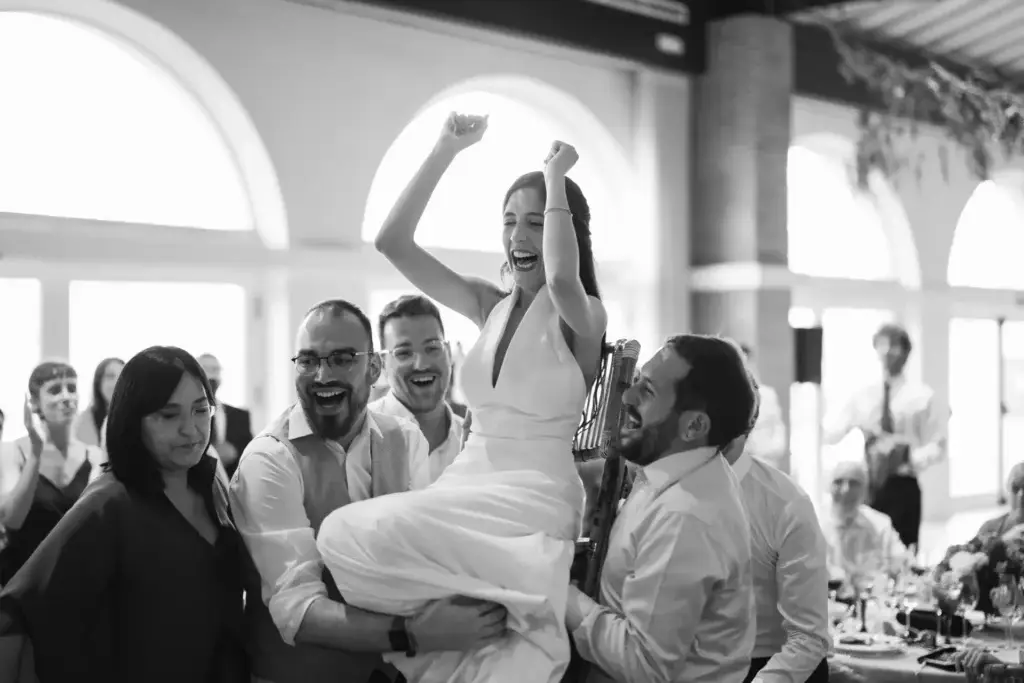
These are choices, not signs that something has gone wrong. A little motion blur can convey dancing beautifully, and some grain feels natural in an evening image. The question is whether the important part of the scene remains legible. During vows or a speech, I generally want recognizable expressions; on the dance floor, a more energetic result may suit the moment.
The four low light situations I prepare for
Dark rooms during the morning
Getting-ready spaces sometimes have one small window, heavy curtains, or a mixture of warm lamps and cool daylight. I may move closer to the window, change the direction of the composition, or turn off an intrusive lamp if it doesn’t affect anyone else’s preparations. I’m not interested in converting a personal morning into a lighting demonstration; the atmosphere and the people still come first.
If the room is very dark, I may use additional light for selected photographs. That doesn’t mean every candid interaction needs to be illuminated. Sometimes the shape of the window light is exactly what makes a quiet moment beautiful.
Ceremonies in churches and dim interiors
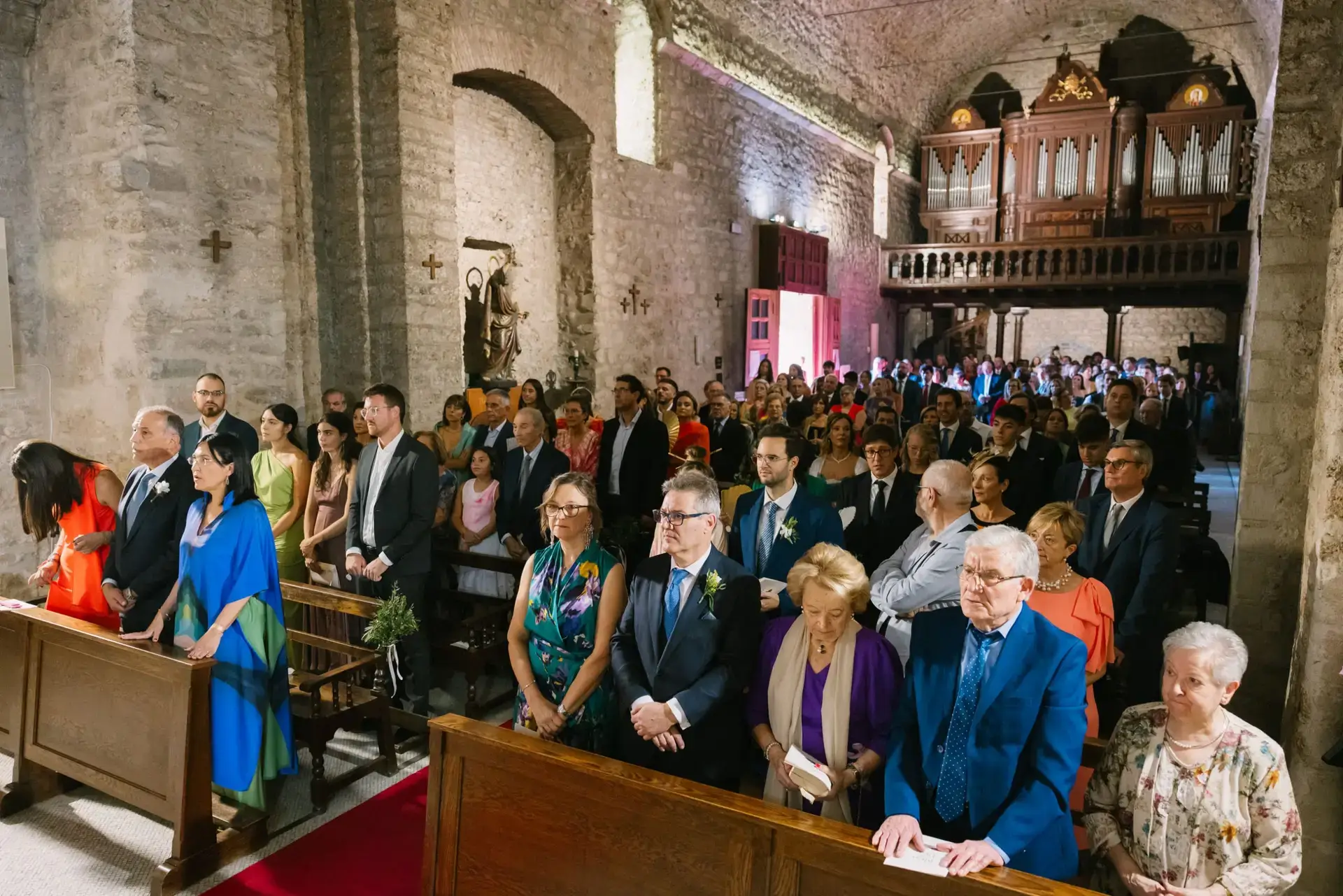
A historic church can be visually extraordinary and quite dark, especially away from the windows. The couple and guests may also move between bright and shaded areas within the same ceremony. I work with the available light and the space I’m allowed to occupy, anticipating important moments rather than constantly changing position.
Flash may be prohibited or simply inappropriate during a religious service. Even when permitted, there are moments when using it would be distracting. The photographer should know the restrictions and be comfortable working quietly without assuming that every scene needs extra light.
Candlelit dinners and outdoor receptions
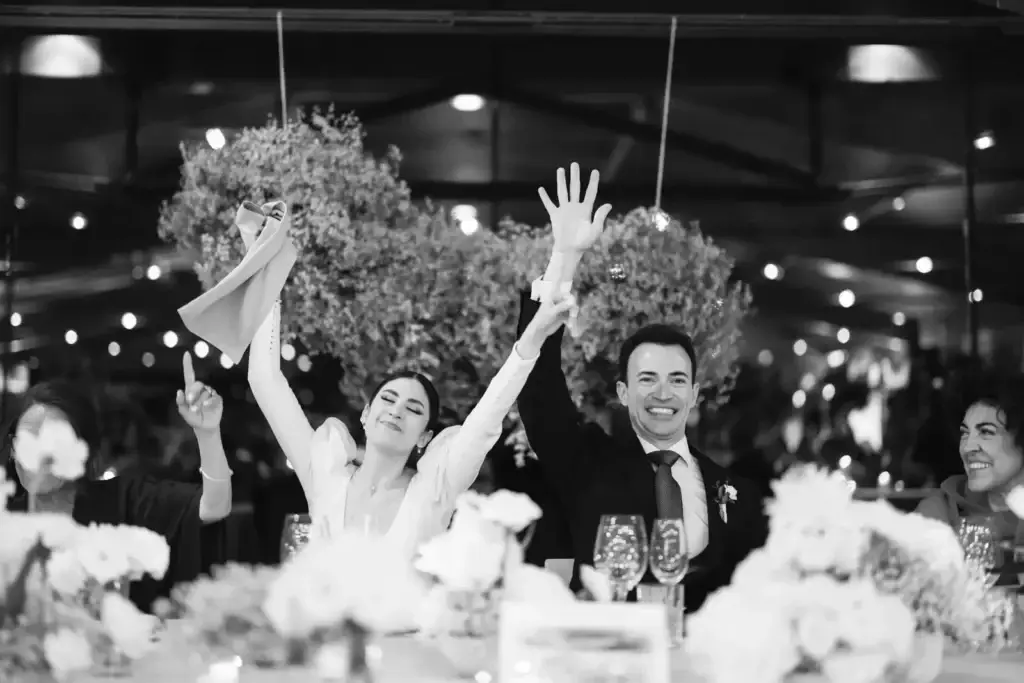
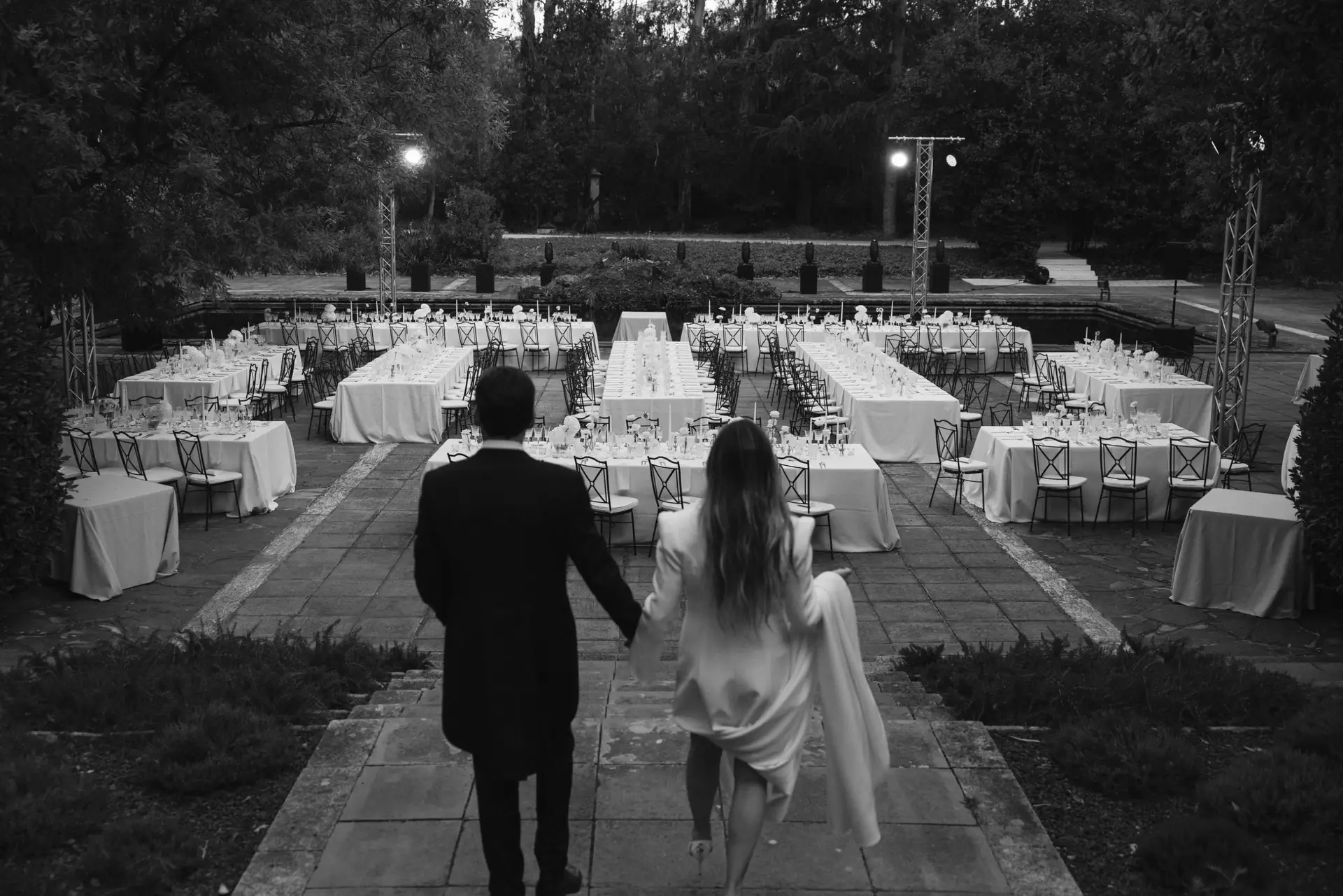
Candles are wonderful for atmosphere, but they rarely illuminate a whole table of moving people on their own. Decorative string lights can look bright to the eye while leaving faces fairly dark. I try to preserve those points of light in the frame, using the available lamps where possible and adding light selectively when it helps capture reactions or interactions.
Outdoor dinner spaces can become darker as the sky disappears, even if they were easy to photograph during the cocktail hour. It’s worth asking the venue how tables, service paths, and speech areas will actually be lit. Good lighting benefits guests and staff as well as the photographer.
The dance floor
People move fast, colored stage lights change constantly, and there may be very little stable light on faces. Here I am much more willing to use flash creatively. It can freeze a split-second expression, keep a dancer sharp against a moving background, or become part of a deliberate party aesthetic.
The most important thing is that I can stay responsive to what is happening. I don’t want a complicated setup to pull me away from the people enjoying the evening. Technical flexibility lets me concentrate on expressions, movement, and connections.
When I use available light and when I add flash
I prefer using available light when it gives me enough exposure and suits the mood. Window light during preparations, architectural lighting in a venue, and softly lit dinner tables can all be beautiful without flash. But insisting on available light in every situation can mean missing an important moment or recording a blurred expression.
Flash is a tool, not a single visual look. It can be subtle and almost disappear into the room, or direct and unmistakable in a lively party photograph. What matters is matching the approach to the part of the wedding, respecting restrictions, and making the images feel consistent with the experience.
What about grain, noise and sharpness?
Digital cameras can work in very low light, but no camera makes darkness irrelevant. Higher sensitivity can introduce noise, and aggressive noise reduction can soften detail. I would rather deliver an emotionally meaningful photograph with a little texture than discard it because it doesn’t look like a studio image at 200 percent magnification.
At the same time, romantic atmosphere shouldn’t become an excuse for an entire gallery of unusably blurred photographs. Good low-light photography means recognizing when motion should be frozen, when blur is intentional, and when the light needs help. A complete wedding gallery is a much better test of that skill than a handful of carefully selected night portraits.
How to plan lighting without designing a movie set
For an outdoor reception, ask the venue whether the dining area and speeches will have some practical lighting after sunset. For an indoor reception, check whether the lights can be dimmed gradually rather than switched from bright white to almost dark in one step. And if you’re planning a candlelit ceremony, find out whether there are photography restrictions and how the space looks with the candles actually lit.
It’s useful to tell the photographer about anything unusual: a completely dark entrance, a surprise sparkler moment, live performances, or a first dance under dramatic lighting. None of this requires you to learn camera settings. A realistic schedule and basic information about the environment are enough to help us prepare.
What editing can and cannot rescue
RAW files allow more flexibility when adjusting exposure and white balance afterward, particularly when the light has changed during the day. They don’t make impossible exposure decisions disappear. If a face is severely underexposed or a white shirt has lost all highlight detail, recovery has limits; mixed colored light can be difficult to correct without removing the character of the scene.
I edit with the whole gallery in mind. I want a dark ceremony to still feel intimate and a lively evening to keep its warmth, even if the individual images need different technical adjustments. Making every room look equally bright would erase the natural progression of the day.
Frequently asked questions
Should we choose a brighter venue for photography?
Not unless lighting is already important to your experience. A darker venue can be beautiful, and a photographer experienced in those conditions should be able to work within them. I would focus on comfort, safety, and whether the essential moments can be seen clearly.
Can you photograph a ceremony without flash?
Usually yes, although the results depend on the actual light and movement. Photographers should discuss restrictions with the officiant or venue and show comparable complete galleries. Very dark settings sometimes require compromises between image sharpness, grain, and the available atmosphere.
Will the photographs look much brighter than the room did?
They shouldn’t have to. Some exposure adjustment is normal, but I prefer images that respect the character of the room. Ask to see evening photographs from an actual wedding to understand your photographer’s approach.
The question I would ask any wedding photographer
Don’t ask only whether they own a camera that works in low light. Ask to see the speeches, dinner, ceremony, and dance floor from one complete wedding with challenging conditions. You should be able to recognize people’s faces, feel the atmosphere, and see that the photographer adapted as the light changed. If you’re considering me for your wedding, that’s exactly the kind of work I’d want you to look at before making a decision.
For the transition between sunset and night, see blue hour wedding photographs.
To see whether my approach fits your wedding, explore my photography portfolio and tell me about your date and venue.