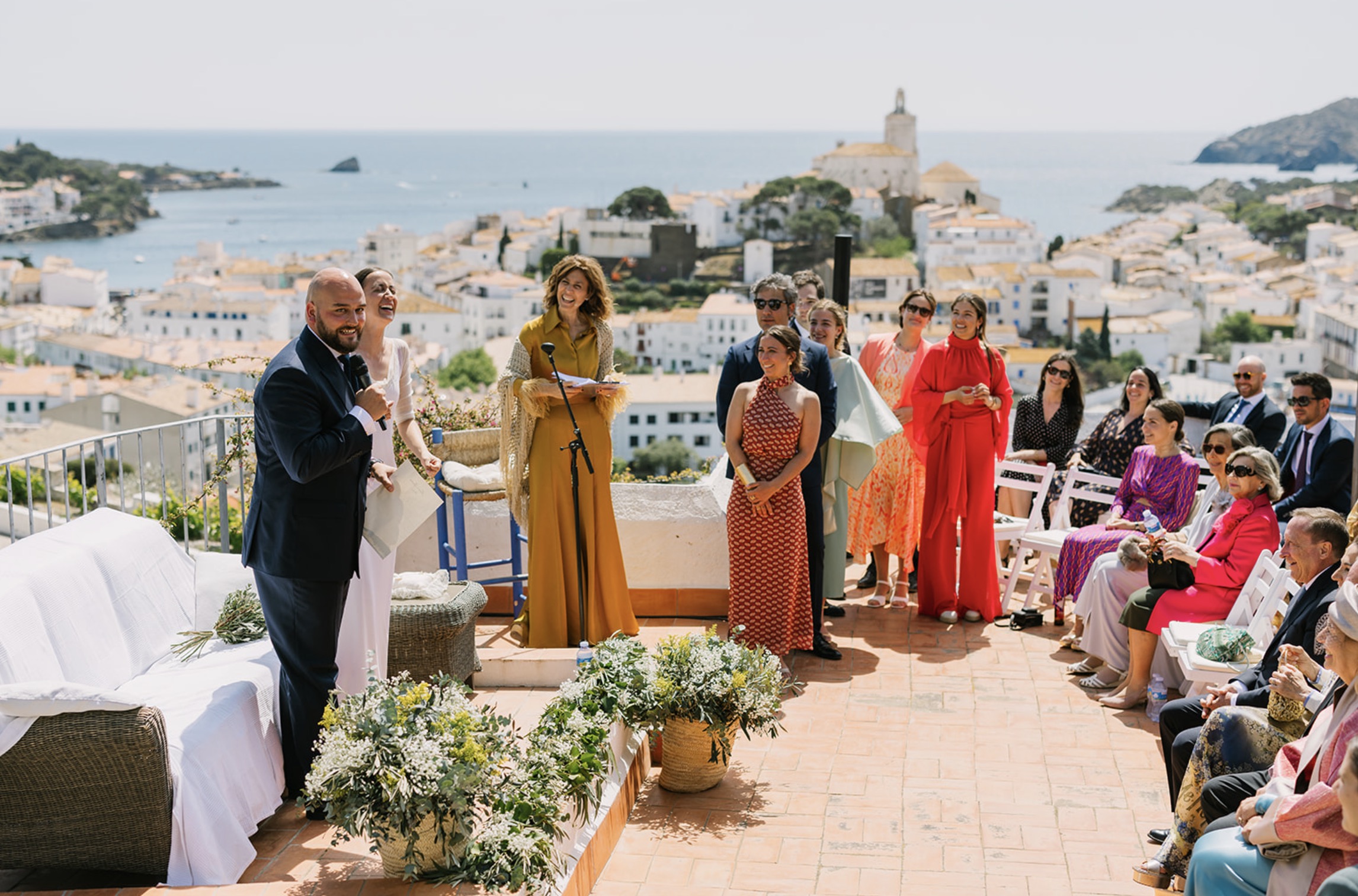
By Alejandro Cebrián · Sunnydays Fotografía
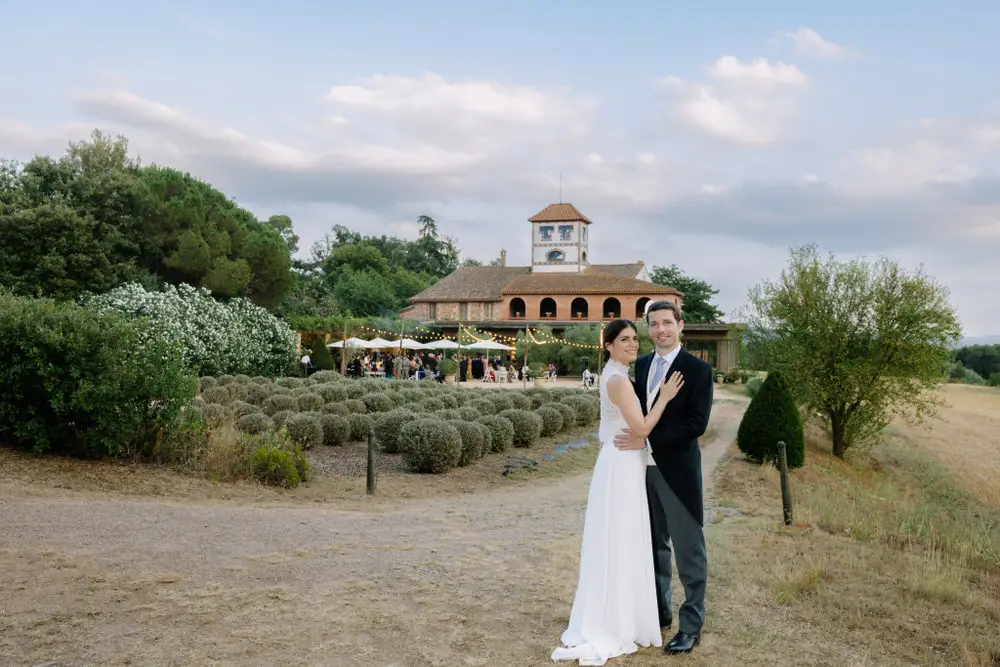
If your ceremony is at two in the afternoon on a sunny day, I wouldn’t tell you that your wedding photographs are doomed. I’ve photographed weddings for more than ten years, and one thing I’ve learned is that beautiful light and comfortable light aren’t always the same thing. Direct midday sun creates harder shadows and stronger contrast, but neither of those automatically makes a photograph bad.
What matters is understanding where the difficulties appear and deciding which small changes are worth making. A photographer can make technical decisions about exposure, angle, and background. You can make a few thoughtful choices about the ceremony setup or portrait time without reorganizing your whole wedding around the camera.
Why direct sun is challenging in photographs
On a cloudless day, sunlight comes from a relatively small apparent source in the sky, creating well-defined shadows. Under overhead light, those shadows often sit beneath eyebrows, noses, and chins. One side of a face may be extremely bright while the other is dark, particularly when someone turns toward a different part of the ceremony space.
There is also a difference between what your eyes can comfortably take in and what a single photograph can record. A white dress in sun and a dark suit in shade can have a considerable brightness difference. Good exposure decisions preserve important detail, but a photographer cannot always make every part of a high-contrast scene equally bright without changing its natural appearance.
Hard light can also be striking. It draws precise lines on stone walls, gives architecture shape, and creates strong shadows that suit more graphic editorial wedding photographs. I quite like that character when it serves the photograph. The problem is usually less about direct sunlight existing than about it falling awkwardly across people’s faces at a moment that cannot be repeated.
The best light direction for an outdoor ceremony
If you have some flexibility in ceremony placement, look at where the sun will be at the actual ceremony time. A venue that looks shaded during your morning visit may be in full sun by midafternoon. Even a small difference in the orientation of the chairs or the position of the ceremony table can change where the light falls.
As a general principle, consistent light on both partners is easier to work with than one person in deep shade and the other in bright sun. Partial shade across a face is often more distracting than evenly strong light. I would check whether an overhead branch, pergola, or architectural detail makes moving patches of shadow as the sun changes position.
Don’t make this decision only from a phone’s weather icon. Ask the venue for photographs of ceremonies held at a similar time of year and day. If you’re visiting beforehand, stand where you’ll exchange vows and look at the light, not only the view behind you.
Should the sun be behind you or in front of you?
There isn’t a universal rule. Backlighting can create lovely separation around hair and clothing, but may put faces in relative shadow and requires careful exposure. Facing directly into low sun can cause squinting; overhead light creates a different set of challenges. I would choose the direction based on the actual ceremony space and where the photographer can work without obstructing guests.
Shade is helpful but it needs to be good shade
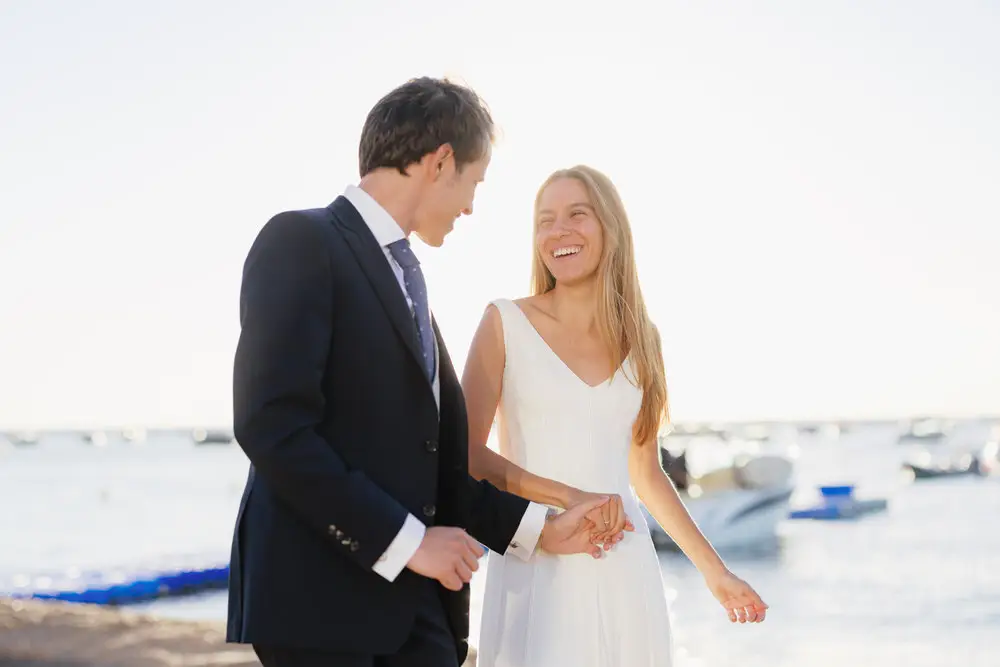
A doorway, covered terrace, or open-sided porch can provide softer light for a short portrait session. Large open shade often keeps faces more evenly illuminated than small patches beneath trees. If there is a shaded courtyard close to the reception, we might use it for a few relaxed portraits while everyone else enjoys the cocktail hour.
But shade isn’t automatically perfect. A narrow strip of shade with a sunlit wall directly behind you can produce an uncomfortable brightness imbalance. Deep shade under a dense roof can also feel flat or take on unusual colors from nearby surfaces. A good photographer looks at the quality and direction of the light within the shade, not merely whether the ground is dark.
I would never pull you away from a meaningful moment just because a prettier patch of shade exists ten yards away. Moving people makes sense during a planned portrait window; it makes much less sense while someone is congratulating you or your grandmother is hugging you.
Portraits at noon are possible
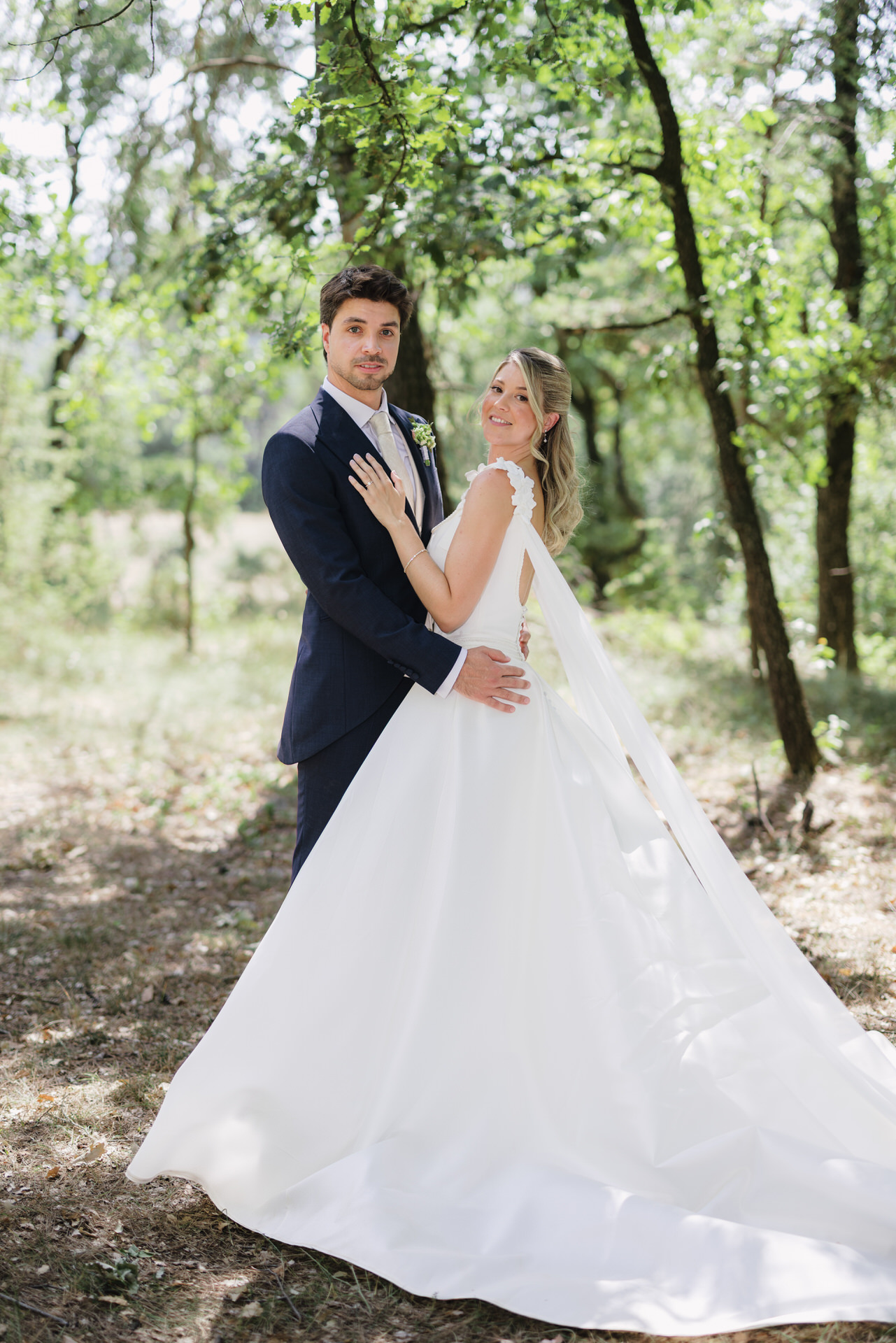
Let’s say you’ve arranged for portraits immediately after an early ceremony. There’s no reason to cancel them. We can find a quieter background, turn you slightly relative to the sun, move under open shade if it’s nearby, or use the strong light deliberately for a more editorial result.
For couple portraits, I usually care more about how comfortable you feel together than about spending half an hour hunting for a perfect lighting location. Five calm minutes in a workable spot can give us photographs that feel like you. If the light later becomes softer, we can take a few additional portraits in a very different mood.
Wedding group photographs deserve a little extra attention because several people need to be evenly lit at the same time. An attractive wall in direct sun might be less useful than a plain wall in even shade. We should also avoid asking guests to stare into harsh sun for a long sequence of family combinations.
What a photographer can change without moving you
The camera settings matter, but so does where the photographer stands. Changing an angle by a few steps can remove a distracting bright patch behind a face. Waiting for someone to turn toward the light can make a candid portrait more flattering. Choosing a tighter frame may keep a blown-out sky from dominating an otherwise lovely interaction.
Sometimes I expose to protect bright clothing and keep the shadows a little deeper because that is how the scene felt. Other times, a subtle amount of fill light may be appropriate, particularly for arranged portraits. The choice should suit the atmosphere and the actual picture, rather than follow one technical recipe for the entire day.
Editing can refine highlights, contrast, and color afterward. It cannot reliably recover detail that was never recorded or guarantee natural corrections to squinting and awkward shadow patterns. That is why shooting decisions still matter even with excellent editing tools.
Is it worth changing your wedding timeline for better light?
Only if the benefit is meaningful to you. In many places, the nicest soft light for couple portraits occurs nearer sunset, but the exact timing depends on season, weather, geography, and buildings around the venue. Moving your ceremony solely for a few photographs could complicate dinner, transport, or the experience of your guests.
My usual suggestion is to let the ceremony happen at a time that works for the wedding, then consider a brief second portrait opportunity later if the schedule allows. You get the natural sequence of your day and two different qualities of light. If there isn’t room for it, that’s fine too; good photography should work with real life.
Frequently asked questions
What if there is no shade anywhere?
We use the light we have. Evenly lit faces, sensible composition, thoughtful exposure, and realistic expectations are enough to make strong photographs. A location’s architecture and the expressions of the people in it matter at least as much as a perfect shadow pattern.
Do direct-sun wedding photos always need flash?
No. Fill flash is one possible tool, especially for arranged portraits, but it isn’t necessary or desirable in every situation. Ceremony rules, distances, available ambient light, and the visual style all affect that decision.
Can you fix harsh sun during editing?
Editing can improve tonal balance and color, but it’s not a substitute for positioning and exposure. Be wary of anyone promising to transform every harshly lit scene into soft evening light afterward. Those are different lighting conditions, and making one look like the other can also make the photograph look artificial.
My advice if you’re planning a sunny outdoor wedding
Ask your venue about ceremony shade, check the sun’s direction at your actual start time, and build a little flexibility into the portrait schedule. Beyond that, don’t let lighting charts take over your wedding planning. If you’re getting married outdoors in Barcelona or the Costa Brava, I’d be happy to look at your venue and talk through the practical options with you.
For a different quality of light later in the day, see golden hour wedding photography.
To see whether my approach fits your wedding, explore my photography portfolio and tell me about your date and venue.