By Alejandro Cebrián · Sunnydays Fotografía
Editorial wedding photography suggests elegant portraits, beautiful compositions, and images that could belong in a magazine. But it can also create the wrong impression: that your wedding needs to become a fashion production, with every expression planned and every moment directed.
That’s not how I see it. I love an editorial approach because it encourages photographers to think carefully about light, shape, background, and the way an image feels. But after more than ten years photographing weddings, I believe those qualities can live alongside spontaneous, emotional storytelling. You shouldn’t have to choose between looking beautiful in your photographs and actually enjoying your wedding.
Editorial is a visual language, not a promise of constant posing
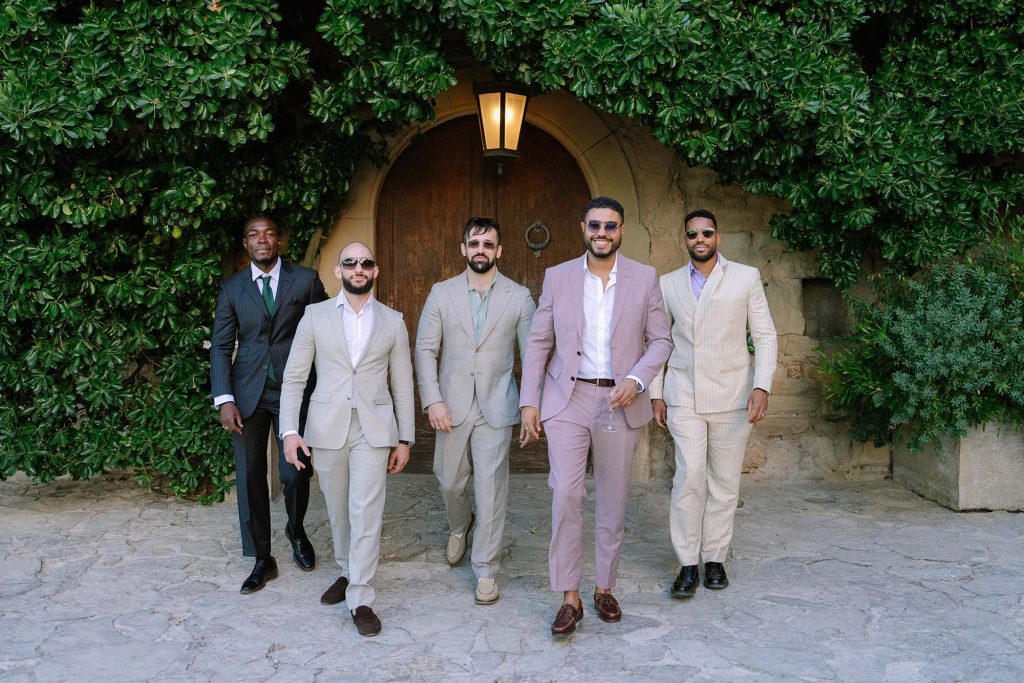
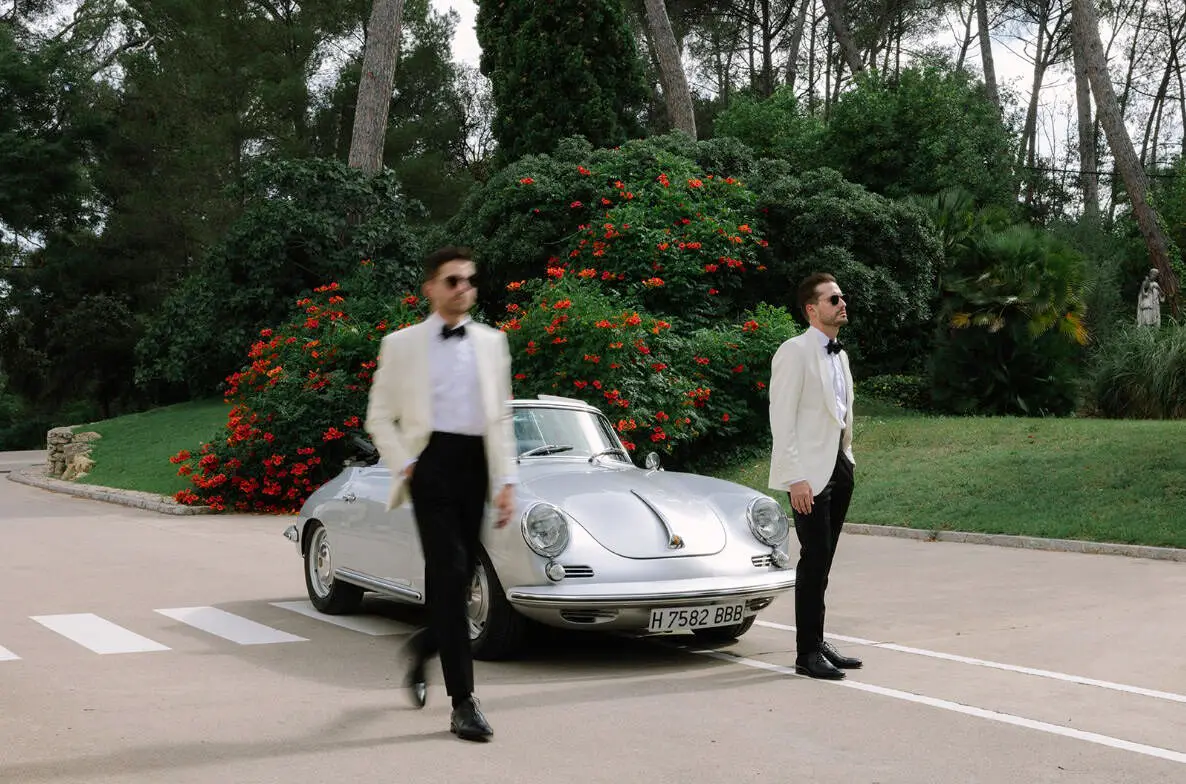
Editorial photography draws inspiration from fashion and magazine imagery. It often uses considered framing, a strong sense of place, deliberate use of light, and portraits where clothing, gesture, and composition work together. Sometimes the photographer gives clear direction. Sometimes they simply recognize a naturally elegant frame and capture it without intervening.
This is why two photographers who both describe themselves as editorial can deliver very different experiences. One may stage long portrait sessions with extensive posing; another may create a few carefully directed photographs while spending most of the day observing. You need to ask what the approach looks like in practice, not just admire the label. My comparison of wedding photography styles explains the broader differences.
What good editorial wedding portraits look like
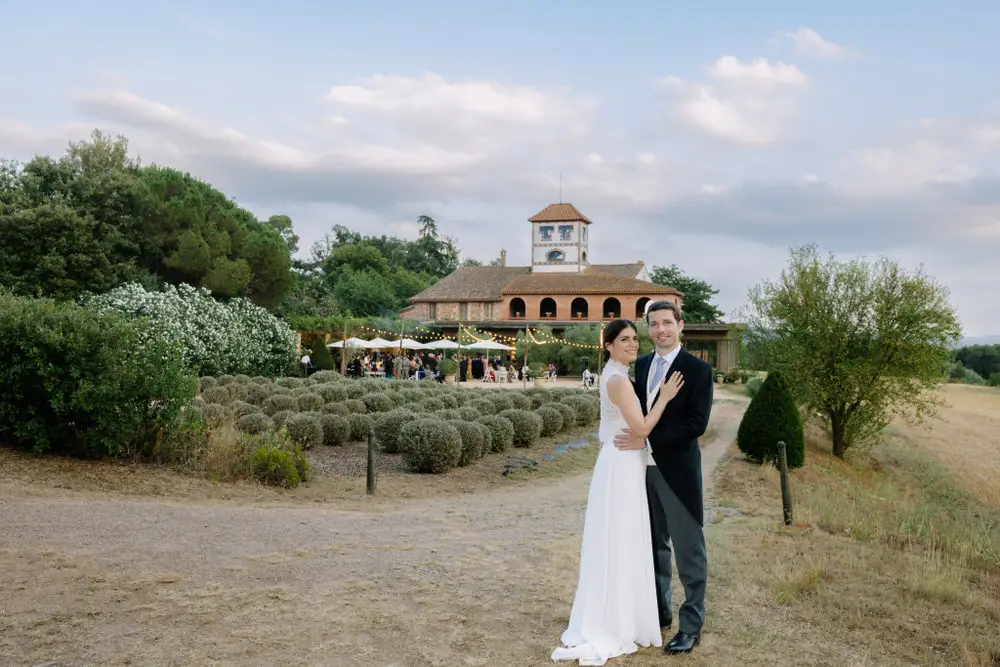
For me, the strongest editorial portraits don’t erase the personality of the people in them. They use the environment to make an image visually interesting while allowing the couple to remain recognizable. A beautiful staircase, a textured wall, or a garden in soft light can help create a strong composition, but the setting shouldn’t overpower the people.
Simple direction is often enough. I might suggest turning slightly toward the light, walking together, or moving away from a distracting background. Small adjustments can change the photograph significantly without requiring the couple to perform a complicated pose. The aim is an elegant image that still feels like a real memory of the day.
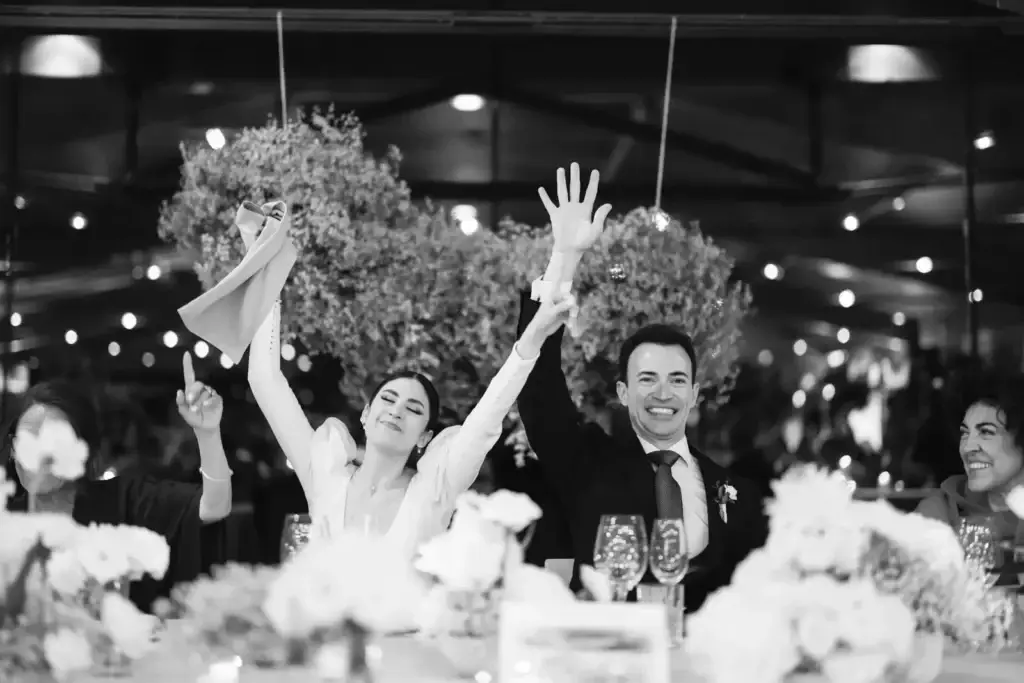
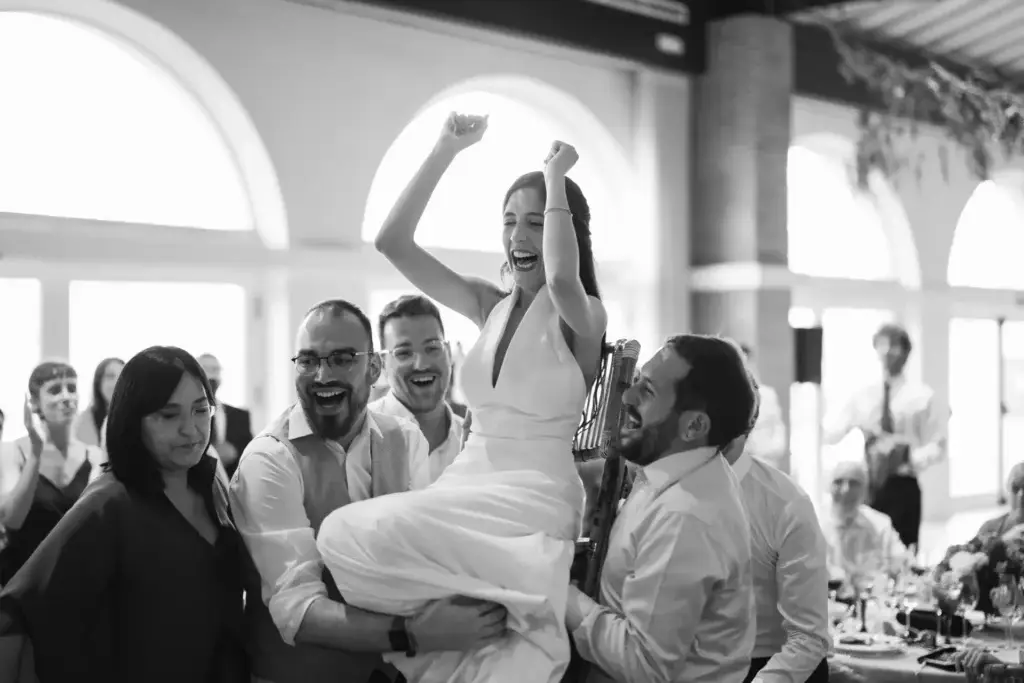
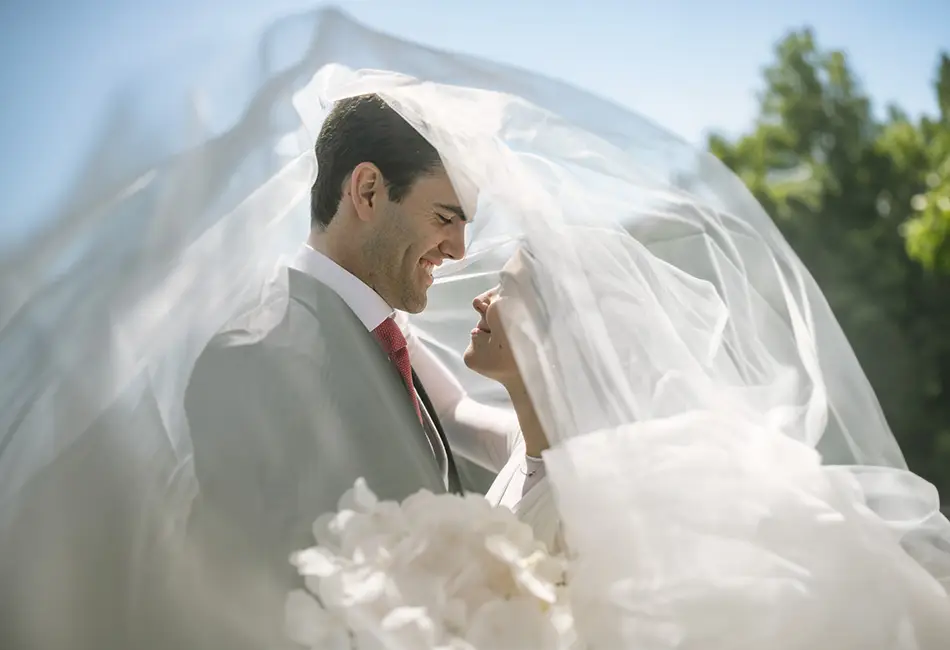
It’s also important not to confuse editorial with emotionless. A photograph can be beautifully composed and still contain laughter, movement, or tenderness. In fact, that contrast is often what makes it interesting.
How editorial and documentary photography work together
The wedding day has many different rhythms. During the ceremony, I want to anticipate moments without interfering. During speeches, I want to notice expressions and reactions. At cocktails, I want guests to feel free to talk and enjoy themselves. These parts of the day lend themselves to documentary coverage.
The couple session offers more room for visual intention. We can choose a location, make the most of the available light, and create a small set of portraits with an editorial feel. But I don’t think that means disappearing from your guests for an hour. A short, relaxed session can be enough when the photographer understands the space and knows what they want to achieve.
Details also benefit from an editorial eye. A table setting, a dress, or a floral arrangement can be photographed with attention to composition and color. Yet these images should support the story of the day rather than displace the people at its center.
Light matters more than a fashionable pose
You may have seen magazine-style wedding photographs taken in warm evening light, on grand staircases, or against dramatic architecture. Those settings can be wonderful, but copying the pose alone won’t create the same image. The direction and quality of the light, camera position, background, and timing are often what make the photograph work.
The same venue can look completely different by season and hour. When the sun is high and shadows are strong, I may seek open shade, use a different angle, or embrace the stronger contrast. When the light is soft, I can work more freely across the scene. At night, flash or another light source may be useful. Editorial photography isn’t limited to one lighting recipe.
I would be cautious about a photographer who can only show beautiful portraits under ideal conditions. Ask to see how their editorial eye survives an ordinary getting-ready room, a church interior, or a reception after dark. A complete wedding gallery tells you whether the visual standards remain consistent.
The danger of chasing the same inspiration images
Pinterest and Instagram can be useful ways to explain what you like, but there is a difference between inspiration and replication. If every couple recreates the same staircase pose, flash photograph, or carefully arranged veil shot, the gallery can begin to feel more like a trend than a record of a specific wedding.
I think it’s much more interesting to understand why an image appeals to you. Perhaps it’s the movement, the clean framing, the confident but relaxed body language, or the feeling of a beautiful place. Once we understand that, we can create something that belongs to your own celebration rather than copying the exact circumstances of someone else’s.
Trends change quickly. The people in your photographs—and the way you remember them—are what remain. I’d rather build an editorial look around your personality than force you into a visual formula that happens to be popular this season.
Is editorial photography right for a camera-shy couple?
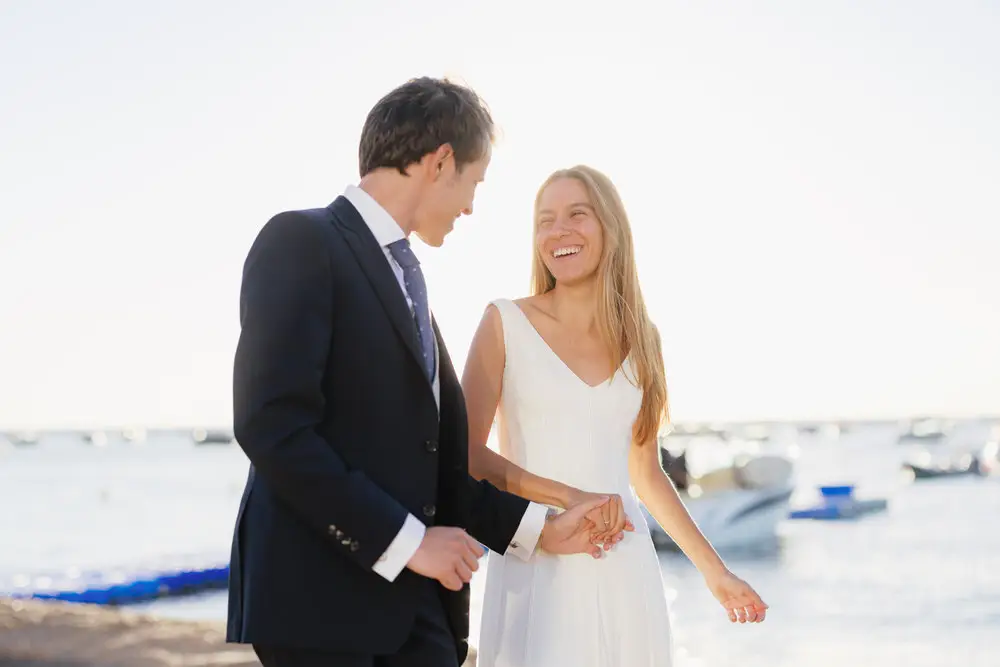
Yes, provided the photographer’s direction is comfortable for you. You don’t have to know how to pose. A few simple suggestions and a relaxed conversation can help you stop thinking about your hands or where to look. In my experience, the best results often come when couples feel they can move and interact rather than hold a rigid position.
Tell the photographer if you’re nervous, prefer minimal direction, or dislike particular kinds of portraits. A professional should listen and adapt. The aim is not to make everyone look like professional models. It’s to make beautiful photographs of the actual people getting married.
How to recognize the right editorial photographer
Look through a full wedding, not only a grid of carefully styled portraits. Do the images show a range of emotions? Does the photographer handle real guests and less photogenic spaces with the same attention? Are the couple portraits varied, or do all couples look as though they’re performing the same set of instructions?
Ask how much time they typically use for portraits and whether the timeline can adapt to weather, light, and the flow of your celebration. You should understand the experience you’re booking. A beautiful result isn’t truly a good fit if achieving it requires a kind of wedding day you don’t want.
Frequently asked questions
Is editorial wedding photography the same as fine art?
The labels overlap, but they aren’t standardized. Editorial often emphasizes a magazine-inspired visual language and some intentional direction; fine art is used more broadly to suggest a carefully considered aesthetic.
Do we have to pose for editorial wedding photos?
Not constantly. Some portraits may be directed, while ceremony and guest moments can be photographed naturally. Ask the photographer how they balance the two.
Can we have both editorial portraits and candid photographs?
Yes. In fact, that combination is central to my approach: thoughtful composition when it helps, and space for real moments to happen without intervention.
Is editorial photography only for luxury weddings?
No. A photographer can use clean composition and beautiful light at an intimate city ceremony or a simple countryside celebration. An expensive venue isn’t a prerequisite for considered photography.
Choose the experience as well as the images
If you love photographs that feel elegant and timeless but don’t want a wedding day dominated by posing, look for someone who demonstrates both visual intention and a sensitive documentary eye. The best proof is a complete gallery that makes you feel something, not a portfolio of perfect fashion-inspired frames alone.
My favorite photographs often sit somewhere between those approaches. They’re carefully made, but they still feel effortless. If that’s what you’re imagining for your wedding in Barcelona, the Costa Brava, or another European destination, I’d love to hear your plans.
For practical advice on feeling comfortable, see what natural wedding photography feels like.
To see whether my approach fits your wedding, explore my photography portfolio and tell me about your date and venue.