By Alejandro Cebrián · Sunnydays Fotografía
An unplugged wedding ceremony is simply one where you invite your guests to put away phones, tablets, and personal cameras while you exchange your vows. You don't have to ban photography for the whole wedding, and you don't need a stern set of rules. You can ask people to be present for this part of the day and let the professional team record it.
I've photographed weddings where guests are deeply involved in the ceremony and others where a line of raised screens appears as the couple enters. Neither scene tells me what kind of people the guests are. Most want to capture something they care about. The question is whether you would rather see their faces than their devices during the moments that matter most.
Why couples choose an unplugged ceremony
For some couples, it's primarily about photographs. A guest leaning into the aisle with a phone can block a professional camera's view, and a screen held in front of someone's face can become part of an otherwise emotional photograph. There are also practical safety and movement issues when several people step forward at once.
For others, the reason is more personal. They want their friends and family to listen to the vows, watch the reactions, and share an experience without feeling they need to document it. That's a lovely reason in itself. The photographs are an extra benefit, not the only justification.
I wouldn't promise that an unplugged ceremony guarantees better photographs. The light, venue restrictions, timing, and people still matter. It simply removes one possible distraction and gives guests permission to concentrate on the wedding.
You can choose how unplugged you want it to be
Some couples ask guests not to use devices from the processional until the recessional. Others make the request only for the vows and rings, or allow photographs from seats but ask everyone to stay out of the aisle. There isn't one compulsory version.
I like a clear request that is easy to understand. “Please keep your phones put away during the ceremony” is simpler than a list of exceptions that nobody remembers. If a few guests need to use a device for accessibility, translation, or a personal reason, you can handle that sensitively without turning the announcement into a confrontation.
If a remote family member will watch by video call or livestream, plan that intentionally with the venue or video team. A single discreet setup can be much better than asking several guests to hold phones up throughout the ceremony. The arrangements should respect the space and the people attending.
How to tell guests without sounding strict
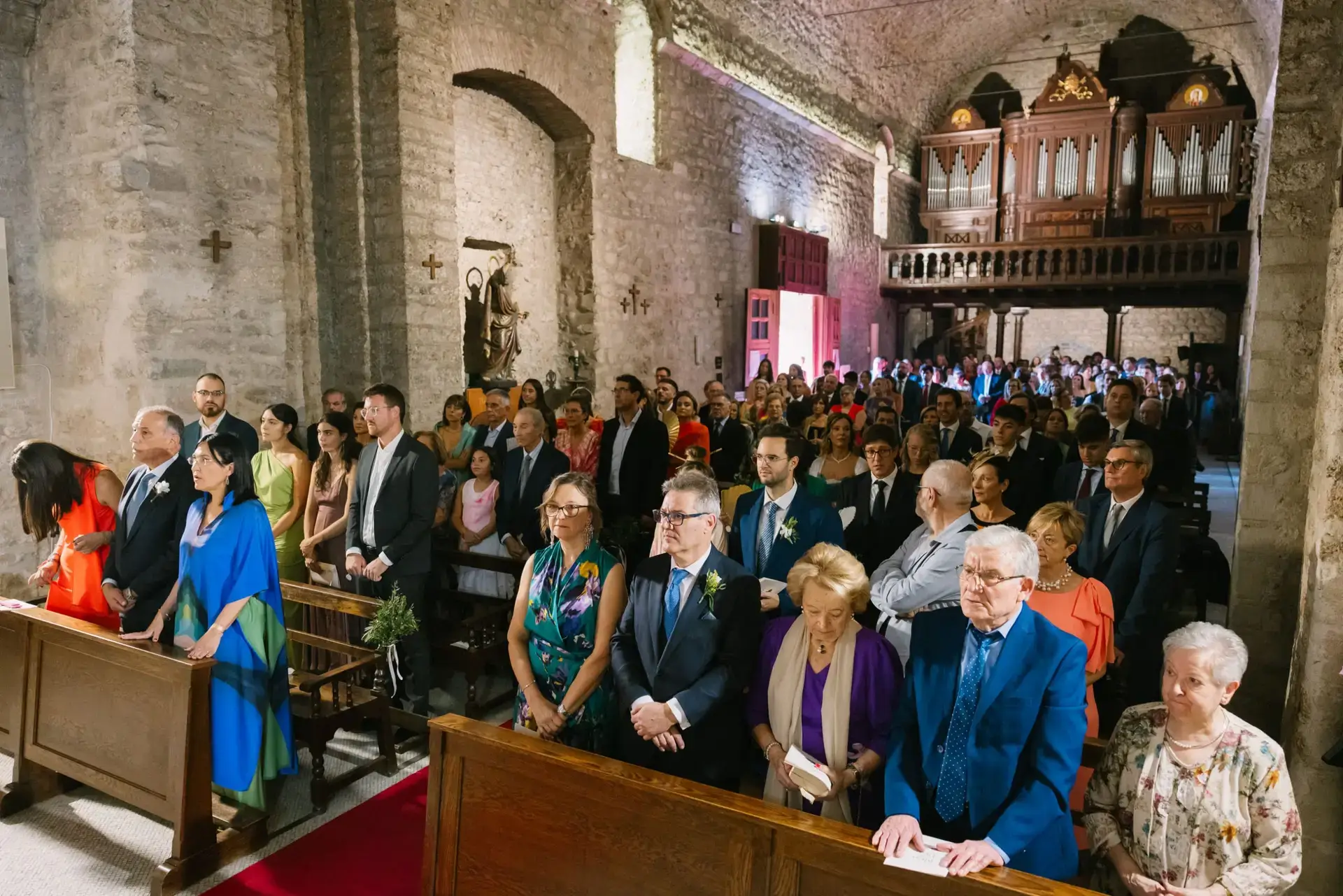
The warmest wording explains what you're inviting people to do, not what punishment follows if they don't. You can mention it on your wedding website or program so the idea doesn't arrive as a surprise. But guests may not read those details carefully, which is why a brief announcement just before the processional can help.
I would avoid signs that sound as though the couple is protecting a commercial photoshoot from the guests. The point is presence and consideration. If the message sounds friendly and comes from the couple, most people will understand the intention.
A short announcement your officiant can use
If you plan to share photographs afterward, your officiant could say: “Before we begin, the couple would love everyone to enjoy this ceremony without phones or cameras. Please put your devices away and be fully present with them. Their photographer will be capturing the day, and they'll be delighted to share photographs afterward. Thank you for being part of this moment.”
That is enough for most ceremonies. It tells people what to do, why the couple is asking, and what will happen with the professional photographs. Ask the officiant to say it before the entrance, not once everyone is already holding their phones in the aisle.
If you're having a multilingual wedding, consider a brief version in the languages your guests understand. A translation doesn't need to be elaborate. The aim is for everyone to receive the same friendly request.
A wedding website or sign can reinforce the message
On your wedding website, a sentence could read: “We'd love you to be fully present during our ceremony, so please keep phones and cameras away until we're married. Enjoy the moment with us; we'll share the professional photographs afterward.”
A small sign near the ceremony entrance can serve as a reminder. It shouldn't replace an announcement if guests are already seated or arriving from different directions. I wouldn't spend a great deal of money on elaborate signage for a message that can be communicated simply.
There may also be cultural expectations around guests recording an event. If photographs and videos are an important way family members participate, discuss the request with them beforehand. A thoughtful compromise can protect the ceremony experience without making guests feel unwelcome.
The entrance is where phones can affect photographs most
When the couple or wedding party walks down the aisle, everyone turns at once. Guests naturally want a picture, and that is the moment when an arm or phone may extend into the photographer's view. A clear pre-ceremony request can make this part of the coverage easier and let the couple see people's expressions.
But I don't want to exaggerate the problem. A phone at the edge of a frame is not necessarily a disaster. A meaningful expression can still matter more than a perfectly clean background. The aim isn't to police every device; it's to reduce unnecessary interference during a once-only moment.
The vows, rings, and first kiss are also fleeting. In a small or crowded ceremony space, even one guest standing up suddenly may obstruct a viewpoint. The professional's own position, any venue restrictions, and whether there is a second photographer also influence what can be captured.
Should the photographer ask guests to stop?
I don't think a wedding photographer should become the phone police. My role is to photograph the ceremony discreetly and respectfully. If somebody moves unexpectedly, I'll do my best to work around them rather than interrupt the vows to correct their behavior.
If the couple feels strongly about the request, the officiant or coordinator is better placed to make the announcement beforehand. Asking guests to comply should be part of the ceremony plan, not an argument staged for the camera. Your guests are there because you care about them.
Let guests take photographs afterward
You can welcome personal photographs once the recessional is over, during the cocktail hour, or at the party. Many guests love making their own pictures, and they often capture funny or informal moments from perspectives no professional can cover. An unplugged ceremony doesn't need to become an unplugged wedding day.
If sharing the professional gallery afterward is part of the announcement, make sure you're comfortable doing that. Some couples want to share the whole gallery; others prefer a selected collection for guests. Check the sharing options of the photographer's gallery platform rather than promising a public link before you know how it works.
How to decide if it's right for you
Think about the ceremony experience you want. Do you mind seeing screens in the aisle? Do you care more about guests putting devices away or simply staying seated? Are there accessibility or family circumstances that need accommodation? Your answer can be gentle and specific without becoming a rulebook.
I would also ask the officiant or venue whether they already have device policies. Some religious ceremonies have expectations of their own. It's better to coordinate one clear message than give guests conflicting instructions.
Frequently asked questions
Will guests be offended?
Most will understand a friendly request, especially when it is explained briefly and early. You know your families best, though, so choose wording that suits them. Make allowances where a device serves an important practical purpose.
Do we need an unplugged ceremony for good wedding photos?
No. A good photographer can work around many distractions, although guests stepping into the aisle can still block a moment. The decision should reflect your preferences as much as photographic considerations.
Can guests photograph the recessional?
You can ask them to wait until the couple has left the aisle, or permit photographs after the vows. Either choice is fine. Decide what matters to you and make the instruction easy to follow.
A friendly request, then enjoy the ceremony
If you love the idea of looking out at the people who came to celebrate with you, make the request warmly and clearly. Let your officiant say it before the ceremony begins, then stop worrying about who follows it perfectly. I'll concentrate on the photographs while you concentrate on the vows and the people in front of you.
For the wider planning context, see planning your wedding timeline.
You can also explore more wedding photography advice.
To see whether my approach fits your wedding, explore my photography portfolio and tell me about your date and venue.