By Alejandro Cebrián · Sunnydays Fotografía
Some photographs become more precious with every passing year, and the ones with your grandparents often belong in that category. They don't need elaborate poses or a dramatic location. Sometimes the picture you'll treasure most is your grandmother straightening your jacket, or your grandfather smiling as you walk down the aisle.
I don't want to turn this into a sentimental checklist that makes you worry about the future. Weddings are a celebration, and the people you love should enjoy them. A little thought in advance, though, can make it easier to have genuine photographs together without asking older relatives to stand around for ages.
Start with the photographs that matter most to you
Before the wedding, think about the people you'd love a photograph with, especially if you don't get to see them often. You might want a portrait with each grandparent, one together with both sides of the family, or simply a few minutes to talk and share a hug. There isn't a mandatory set of combinations every wedding needs.
I usually suggest a short priority list rather than ten variations of the same photograph. If a grandparent is attending only the ceremony, we can make their portraits immediately afterward. If they're staying for the reception, we have more flexibility and may find a quieter moment when they feel comfortable.
What's important is that I know the priority before the day begins. I won't necessarily know that the person in the back row is your only surviving grandparent or that one relative has traveled from another country especially to be with you. You shouldn't have to explain that in the middle of your wedding.
Think about comfort before the perfect background
I love beautiful light and thoughtful composition, but I would never ask an elderly guest to climb a long flight of stairs just because the view is better. A simple portrait near the ceremony exit, on a level terrace, or beside a comfortable seat can be just as meaningful. Accessibility is part of a good photography plan, not an inconvenience to work around later.
If anyone has reduced mobility, tires easily, uses a wheelchair, or would prefer not to stand, tell me discreetly beforehand. We can adapt the camera angle and arrange the rest of the group around them. Seated portraits are still portraits; they do not need to look like a compromise.
Try to avoid placing these photographs at the very end of a long formal session. I generally prefer photographing the people who need the least waiting time first. Then they can return to the celebration while the rest of the family groups continue.
The ceremony offers moments you cannot arrange
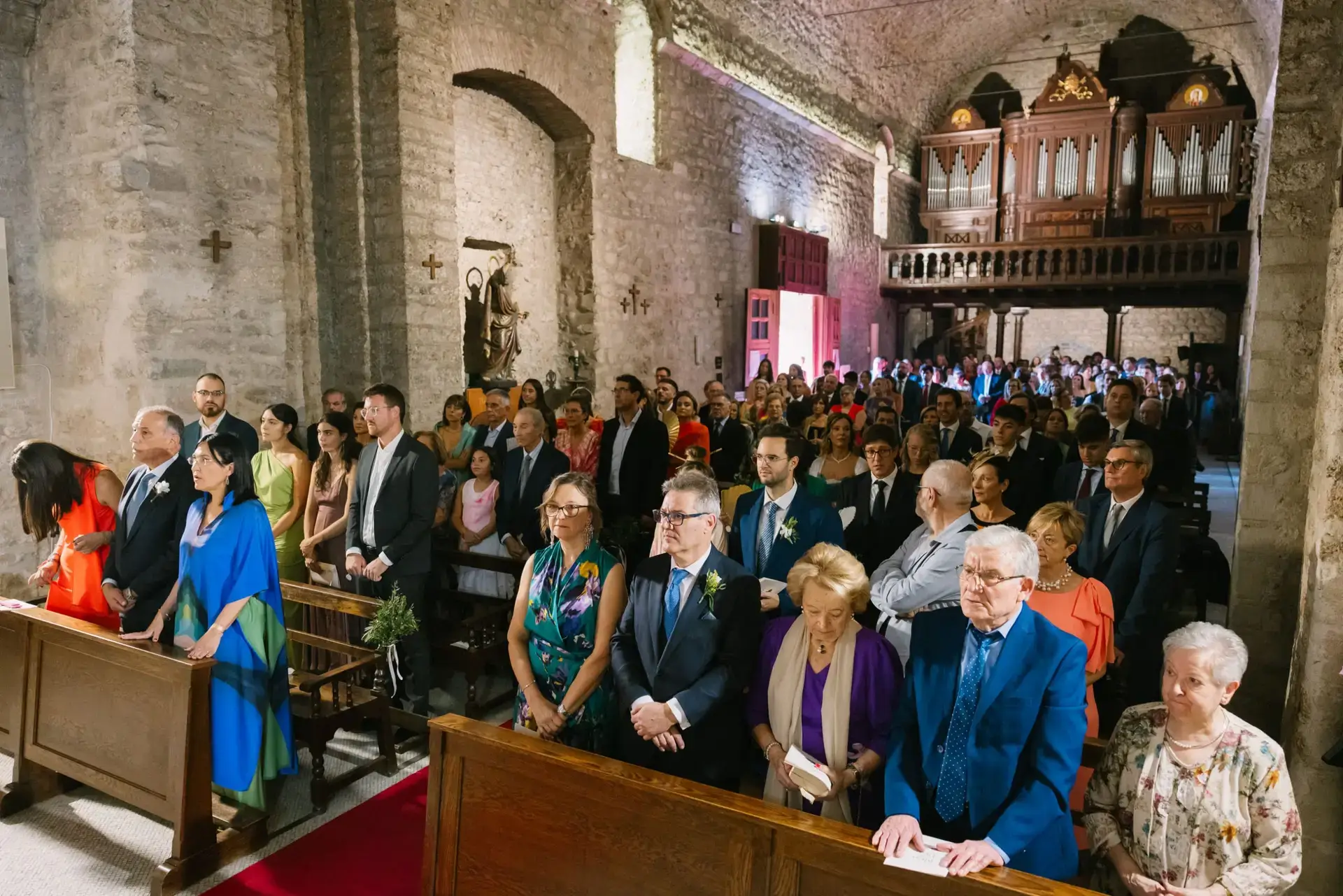
Grandparents often feature in some of the most moving ceremony photographs, whether they're watching proudly, talking quietly before the entrance, or reacting to the vows. These are moments I look for naturally when the ceremony allows it. But I can't promise to record every individual reaction while also photographing the couple, the officiant, and the key events at the front.
If one reaction would mean a great deal to you, let me know. In some ceremonies a second photographer can focus more extensively on guests, while the main photographer remains with the couple. Whether that is worthwhile depends on the ceremony layout and your priorities rather than a rigid rule.
Sometimes the most meaningful photograph happens away from the ceremony. It may be a greeting during cocktail hour or a conversation after dinner. The person matters more than the conventional moment everyone expects to be photographed.
Formal portraits still have a place
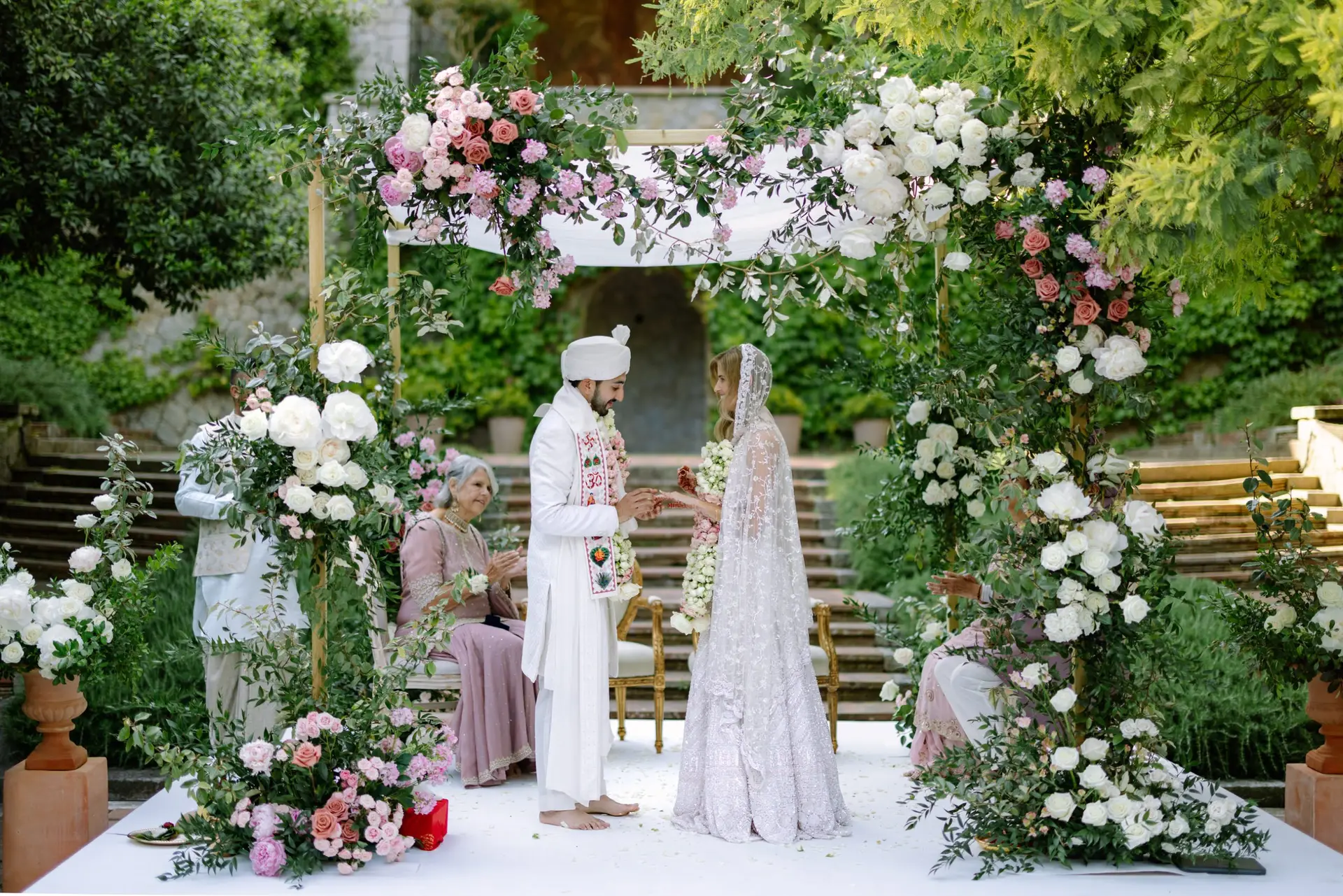
Natural wedding photography doesn't mean refusing to organize a photograph when it matters. If you want a straightforward picture looking at the camera with your grandparents, I think you should have it. It takes very little time when everyone is ready, and it may be exactly the image that ends up framed at home.
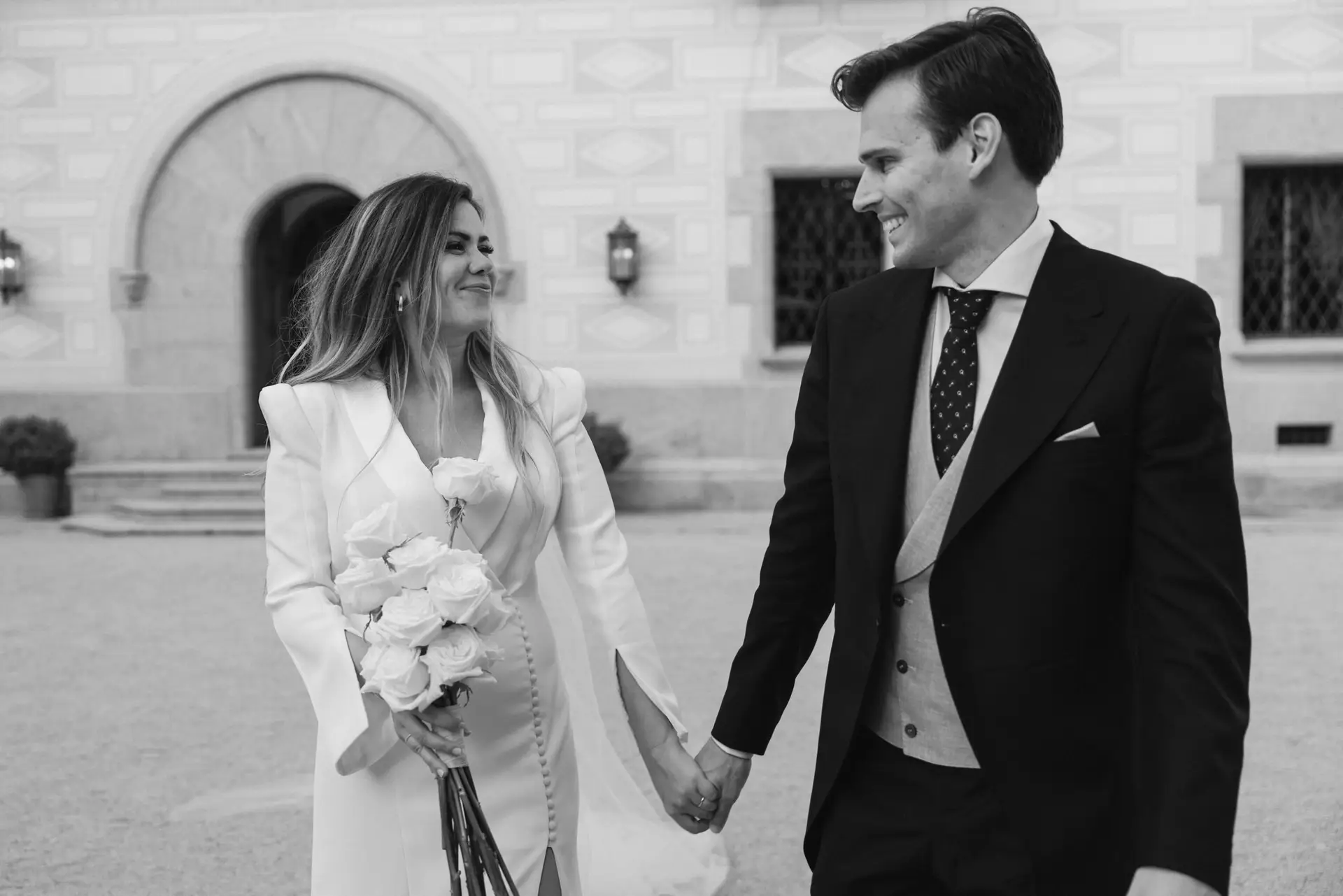
We can also make one more spontaneous photograph afterward: talking, walking a few steps together if comfortable, or sharing a hug. The important thing is not to direct an emotional reaction that isn't happening. A quiet smile and a hand held for a moment are more than enough.
For larger family groups, someone who knows everyone's names is extraordinarily helpful. A cousin, sibling, or coordinator can bring the right people together while I concentrate on positioning them efficiently and finding flattering light. It saves your energy and prevents anyone from being left searching for relatives during the cocktail hour.
When family relationships are complicated
Families are not always simple, and a wedding can bring people together who haven't spoken for years. You don't need to give me a long explanation of why. Just tell me which combinations are welcome, which should be avoided, and whether someone needs a little extra sensitivity.
I can work from a short, discreet list without announcing the reason for the arrangements. In my experience, the photography should make the day easier, not put anyone on the spot. If a person prefers not to be photographed, that also deserves respect.
If a grandparent cannot attend
Not every loved one can travel or comfortably attend a long celebration. If they're able and happy to take part in a short visit before or after the wedding, a separate photograph in ordinary clothes may be more meaningful than forcing an elaborate solution. A video call, family heirloom, letter, or photograph displayed at the wedding may also have personal value, depending on what feels right to your family.
I would never suggest inventing their presence in the wedding story. A real picture from a different day is still valuable, especially when it's clearly presented for what it is. What matters is that you have something honest to keep.
A simple plan for the wedding day
Tell your photographer which grandparents are attending and whether mobility or departure times matter. Choose two or three essential portrait combinations. Ask a family member to help gather people immediately after the ceremony or during a natural pause in the schedule. Then let the day happen, with room for unplanned photographs too.
This can often be accomplished in minutes rather than becoming a separate production. If someone becomes tired or the schedule changes, a flexible plan is worth more than a perfect list that nobody enjoys following.
Frequently asked questions
Should we photograph our grandparents before or after the ceremony?
Either can work. Before the ceremony may be calmer if everybody is already together; afterward is often easier when relatives have gathered. Choose based on their comfort, arrival time, and the flow of your day.
What if a grandparent uses a wheelchair?
We can make a beautiful portrait with everyone positioned at a comfortable height and in accessible light. There's no need to move the person or hide their mobility aid unless they request a particular arrangement.
Can the photographer guarantee candid moments with grandparents?
No particular candid interaction can be guaranteed, because spontaneous moments don't follow a script. We can, however, tell the photographer who's important, plan a few portraits, and leave room for natural coverage.
Plan the simple portraits, leave room for real moments
Please don't feel pressure to stage a collection of emotional scenes. Tell me who matters, help me arrange the simple photographs you'd regret missing, and spend the rest of the time being with them. The photograph is valuable because of the relationship, not because the background or pose is extraordinary.
For the wider planning context, see planning your wedding timeline.
You can also explore more wedding photography advice.
To see whether my approach fits your wedding, explore my photography portfolio and tell me about your date and venue.