By Alejandro Cebrián · Sunnydays Fotografía
I don’t need to know every detail of your wedding six months in advance. I do need to know the things I cannot discover simply by arriving with a camera. Where should I be, when will something important happen, who has a special role, and is there anything sensitive that I should approach with care?
That’s the difference between useful preparation and an enormous questionnaire that leaves couples exhausted. If you’re wondering what to tell your wedding photographer, think of it as sharing the context of the day. You know your people and plans; I know how to respond to light, movement, and moments as they unfold.
The timeline and the real addresses
I need the final ceremony time, getting-ready locations, reception venue, and enough detail to understand travel between them. A hotel address isn’t always enough if the preparation suite is in a different building or a venue has several entrances. Parking or loading instructions can also matter, particularly in a city center or historic property.
The timeline should include the expected start of preparations, ceremony and the main reception events: cocktail hour, dinner, speeches, first dance, and any planned exit. It doesn’t have to predict every five-minute change. I would rather receive a realistic schedule with a little margin than one so precise that it becomes unworkable as soon as somebody is late.
If the photographer is covering several locations, share the actual transport plan. A ten-minute drive on a map can take longer when parking, walking, security, or a busy street is involved. A good plan includes those transitions instead of counting only the travel itself.
Who your most important people are
I will naturally photograph the couple, close relatives, and people who are involved in key moments. But I cannot recognize the special relationship you have with a friend who flew across the world or the aunt who helped raise you. If someone matters in a way I might not discover, tell me their name and how to identify them.
This doesn’t need to become a list of one hundred guests. A short note is enough: your grandfather will read during the ceremony, your childhood friend is giving a surprise speech, your parents have not met in years. Those facts help me anticipate where real emotion might happen without asking anyone to perform it again for the photograph.
I also welcome information about family dynamics that require tact. Divorced parents, estranged relatives, bereavement, or a sensitive relationship can affect the way group photographs are organized. You don’t need to explain personal history in detail. A brief, discreet note about what to avoid or who should not be grouped together is helpful. Share only what affects the photography and what you feel comfortable discussing.
The family photograph combinations you actually want
This is one part of the day where a written list is useful. I can’t guess which relatives you want together or remember every first name during a busy cocktail hour. A short family photo list with specific names and relationships helps me keep the process efficient and prevents an important combination from being forgotten.
Choose someone who knows the families to help gather people when it’s time. The photographer can arrange the group and make the image, but finding an uncle who has wandered off to the bar is much easier for someone who knows him. If a guest needs to leave early or has mobility needs, tell us so that photograph can happen at a convenient moment.
Keep the list realistic. Every additional group takes some time to assemble, even when the photograph itself is quick. A handful of meaningful combinations usually serves a wedding better than an elaborate family tree that keeps you away from the people you’ve invited.
Traditions, rituals and surprises
I know the familiar structure of many weddings, but nobody can know every cultural, religious, or personal tradition without being told. If you’re incorporating a ritual, performance, meaningful gift, or family custom, let me know what happens and when. I can then prepare my ceremony coverage without asking anyone to pause for the camera.
This is particularly important for destination weddings with guests from different countries and traditions. If a moment has special meaning that isn’t visually obvious, a few sentences of context will help. I don’t need you to translate every part of the celebration, but I do want to recognize what deserves attention.
For a genuine surprise, you can ask your planner or a trusted friend to tell me privately. The surprise stays intact for the couple, and I can be ready for the reaction. If a speaker plans to step into a dark corner or enter from another room, knowing that can make a practical difference.
The parts of the day that are most important to you
Some couples care deeply about candid photographs of guests. Others have a particular heirloom, a parent’s reaction, or a few relaxed portraits high on their list. Tell me what you would regret not seeing afterward. Your priorities can shape where I give my attention without requiring every moment to be scheduled.
It’s equally useful to know what you don’t want. Perhaps you would rather skip a long portrait session, or you don’t enjoy being directed in front of a crowd. I’d much rather understand that before the wedding than discover it when you’re visibly uncomfortable.
Don’t worry about asking for the obvious moments. A professional already expects to photograph the ceremony, rings, speeches, and dancing when those events are part of the coverage. What you bring to the conversation is the knowledge of why particular people or objects matter.
Photography and video coordination
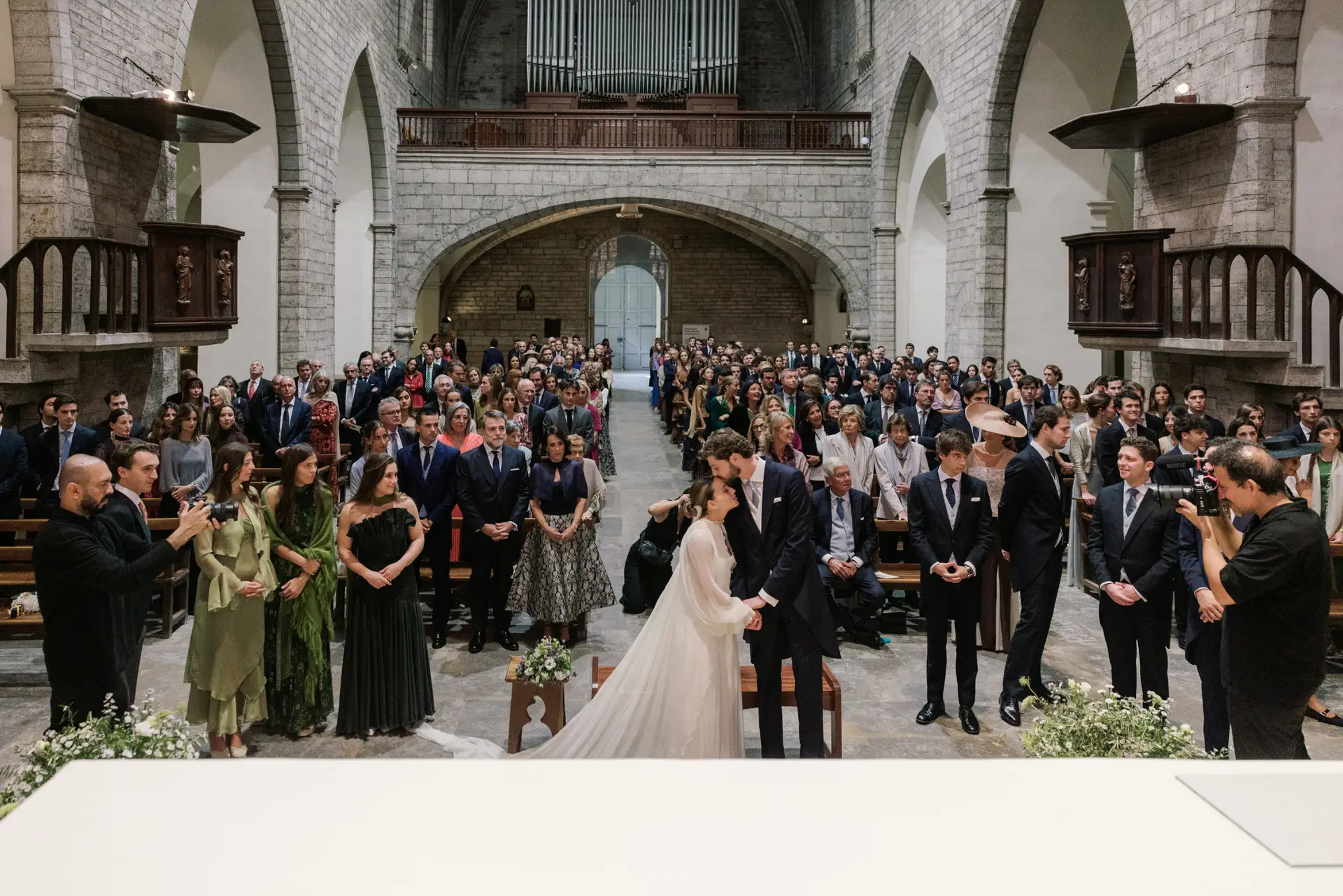
If you have both teams, tell each professional who else is working and how to contact them. They may need to coordinate camera positions during the ceremony, the first dance, and speeches. I don’t expect you to manage two sets of equipment, but a clear schedule and supplier contacts make collaboration easier.
For drone footage, ceremony audio, or a full video of speeches, the videographer may have additional requirements that need discussing with the venue. Make sure you know which service is responsible for which result. Photographs and films complement each other, but they are not interchangeable deliverables.
Venue rules, weather plans and access
Religious buildings, museums, private estates, and historic venues can have restrictions on flash, movement, tripods, or certain areas. If the coordinator has shared rules, send them on. I would rather adapt my approach in advance than be told to move halfway through the vows.
For outdoor weddings, tell me about the rain alternative and when the venue will decide whether to use it. The backup location may have very different light and access. If you’re expecting an unusually bright ceremony or a candlelit dinner, that context also helps me anticipate the equipment and approach I’ll need.
What you do not need to send
I don’t need a list of every ordinary photograph a wedding photographer is expected to take. I don’t need fifty Pinterest poses, minute-by-minute instructions, or a description of every supplier’s job. Information is helpful when it changes a decision; too much detail can bury the useful parts.
I would especially avoid using reference images as a script. We can talk about a mood you like, but your venue, bodies, relationships, and light are different from the people in those photographs. Your wedding should not become an exercise in recreating somebody else’s gallery.
When to send the final information
The first inquiry needs only the basics: date, place, type of wedding, and your interests. A more detailed conversation can happen after booking as plans develop. Nearer the event, when the planner or venue has confirmed the schedule, send one updated document or email with the final information.
If something changes after that, tell me as soon as it becomes clear. A delayed ceremony, a new getting-ready address, or a surprise performance added to the schedule may affect positioning or coverage. A short update is better than assuming I’ll somehow hear about it on the day.
Frequently asked questions
Should we tell the photographer about family conflicts?
Yes, if they affect photographs or interactions. You can do it briefly and privately, without sharing information you don’t want to. The goal is to avoid awkward groupings and show care for the people involved.
Do we need to identify every guest?
No. A few key people and a short family-group list are usually enough. If photographing every guest individually is a priority, discuss that as a separate coverage goal rather than assume it will happen automatically.
What if the wedding schedule changes on the day?
It often does, at least a little. A realistic timeline and contact with the planner or coordinator allow everyone to adapt. I don’t want you spending your wedding managing camera logistics; I want the professionals around you to handle them.
My ideal wedding briefing
Give me an accurate schedule, real addresses, the people and rituals I cannot identify myself, and anything sensitive I should know. Then let me do the job you hired me to do. If you’re planning a wedding in Barcelona, the Costa Brava, or somewhere farther afield, we’ll build that practical understanding together before the day arrives.
For the wider planning context, see planning your wedding timeline.
You can also explore more wedding photography advice.
To see whether my approach fits your wedding, explore my photography portfolio and tell me about your date and venue.