By Alejandro Cebrián · Sunnydays Fotografía
If you like the texture of film but also want every important moment recorded, you don't necessarily have to choose one format for your entire wedding. Film and digital cameras can complement each other very well. They also behave differently when the light changes, people move quickly, or a moment happens only once.
Film wedding photography can form part of my approach to certain weddings, and I love the distinct experience it brings. But I wouldn't tell you film is automatically more artistic or digital somehow less authentic. The interesting question is which format fits the pictures you love and the kind of coverage you want.
The practical difference between the two formats
A digital camera records image data electronically. It allows the photographer to check exposure and focus quickly, work through changing light, and make many frames when a fast sequence matters. A film camera exposes a physical negative that must later be developed and usually scanned before it becomes a digital image you can view.
Film encourages a different rhythm because each frame uses part of a finite roll. Depending on the camera and film, it may also require manual focus, metering, or film changes at moments when the wedding is moving quickly. Digital is generally more flexible for continuous coverage, particularly during a ceremony or an energetic reception.
That doesn't mean film cannot document a real wedding. It certainly can, and photographers who specialize in it can produce remarkable work. It does mean you should understand how the photographer manages limitations and what level of coverage is included in your package.
Why film wedding photographs have a different feel
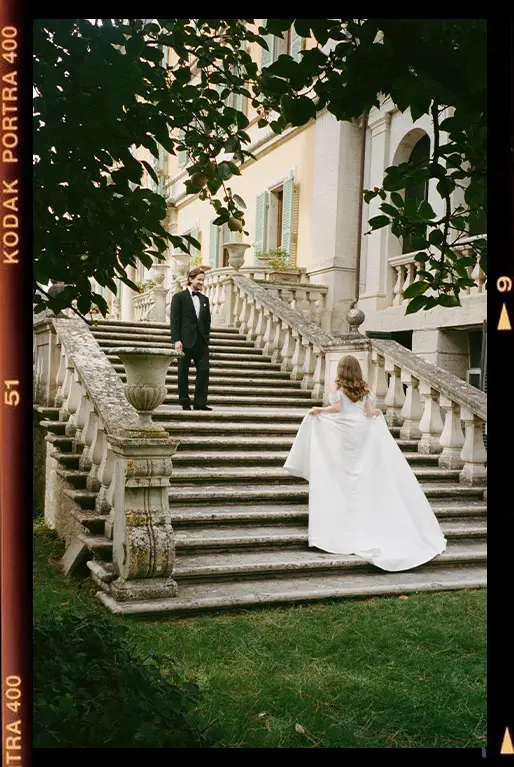
People often describe film as soft, nostalgic, organic, or timeless. Those words can be useful, but they are also imprecise. Different film stocks, cameras, lenses, exposures, processing choices, and scans can produce noticeably different results. There is no single universal “film look.”
Color negative film can have gentle transitions in highlights and a distinct way of rendering colors. Some stocks show fine grain; others are more visibly textured, especially when enlarged or used in limited light. Black-and-white film adds another range of contrast and grain characteristics. I like the fact that the medium has its own visual personality, but I choose it for a purpose rather than simply because it's fashionable.
It's also worth knowing that digital photographs can be edited to resemble film. A digital preset may approximate a palette or grain structure, but it doesn't recreate the entire process of exposing, developing, and scanning physical film. Neither method is inherently dishonest; they are just different ways of creating a look.
How the two formats behave in real wedding moments
Fast movement and moments you cannot repeat
Imagine a recessional where the couple walks out of the ceremony while friends throw petals. Expressions change in fractions of a second, and people cross in front of one another. Digital gives a photographer flexibility to record more of that sequence and review technical issues. A film photographer can capture it beautifully too, but the number of frames and chances to correct an error may be more limited.
For that reason, I usually regard digital coverage as the practical foundation for photographing a whole wedding, with film adding selected photographs that suit its pace and character. This is an approach, not a rule for every photographer. If you're considering a film-only wedding, ask to see complete film-only galleries from comparable venues and conditions.
Low light and nighttime celebrations
Film speed is determined by the roll you load, and working in very dark conditions can be more restrictive than changing digital camera sensitivity. Flash or faster film can help, but there are tradeoffs in grain, shutter speed, and the look of the result. Digital generally gives more flexibility when moving from a bright outdoor ceremony to a dark party. My guide to low light wedding photography explains the decisions involved.
I wouldn't choose the nighttime coverage format from a sunny portrait sample. Ask to see film images from actual indoor receptions and mixed lighting. If your favorite film references were made in soft daylight, expect a different character from photographs made after midnight.
Outdoor portraits and quiet details
This is where film can feel especially satisfying. If we have a few relaxed minutes in flattering light, there's room to slow down and make a small number of considered frames. A film camera can also work beautifully for personal objects, architecture, floral details, or the atmosphere of a venue.
I still don't want you standing around while I endlessly adjust equipment. The medium should add something to the experience without making you feel like you're taking part in a photography workshop.
How many film photographs will you receive?
This is one of the most important questions to ask because film collections vary enormously. A photographer might use a couple of rolls during portraits and details, or they might photograph most of the day on film. A standard 35mm roll often contains around 36 exposures, but not every exposure becomes a delivered photograph and other formats carry different frame counts.
Ask exactly what is included: number and type of rolls, whether development and scanning are covered, how selections are made, and whether the scans will appear in the same gallery as your digital photographs. Avoid treating the number of exposures as a guaranteed minimum of final images. The contract should describe deliverables clearly.
What about reliability and backups?
Digital files can be copied to multiple storage devices as part of a wedding photo backup workflow, which makes a sensible backup workflow possible. Film is a unique physical original until it has been processed and scanned. Lab handling, transport, camera operation, and exposure all add points that need care.
Neither format is immune to problems. A professional should explain the precautions they take, how they handle equipment failure, and what happens if something goes wrong. I'd be cautious of anyone presenting either film or digital as completely risk-free.
What does film cost compared with digital?
Film usually adds direct material and processing costs: rolls, development, scanning, and the photographer's additional handling time. The amount depends on format, location, laboratory, and quantity. Quoting a universal price would be misleading, especially for destination weddings where transporting or processing film may affect logistics.
Digital also involves significant equipment, storage, editing, and backup costs, but extra frames do not carry the same per-exposure material expense. If film is an add-on, ask what you're buying beyond the aesthetic: the number of rolls, coverage moments, scan delivery, and whether the photographer already includes it in a particular collection.
Should you request film even if your photographer mainly shoots digital?
Only if you've seen examples of their film work that you actually like. The camera itself won't suddenly produce the mood of a different photographer's portfolio. Composition, light, timing, and decisions during development or scanning still matter.
Look for how the film photographs sit alongside the digital ones in a complete gallery. Do they feel like two different stories or complementary parts of one wedding? For me, the nicest result is when the formats support each other without making couples wonder which picture was taken on which camera.
Frequently asked questions
Is film higher quality than digital?
There isn't a useful universal winner. Image detail, color, grain, and print quality depend on specific cameras, stocks, sensors, lenses, exposure, processing, and output size. Choose the finished look and coverage experience you prefer, not a general claim about superiority.
Can a digital photo look like film?
It can resemble film in color, contrast, texture, and grain after editing. But it remains a digital capture, which is neither inherently better nor worse. If the physical process itself matters to you, ask for actual film photographs.
Do we need film for our entire wedding?
Not at all. A handful of intentional film images can be a lovely addition while digital handles fast-moving, unpredictable parts of the day. If you're considering film-only coverage, choose someone with direct experience and inspect full galleries from similar weddings.
Choosing the right mix for your wedding
Start with the photographs you love and the moments you want documented. If film is part of that aesthetic, we can think about where it makes the most sense, usually without making it the only tool available. If you're drawn to both formats, ask me about the film options in my current collections and we'll see whether they fit your plans.
For another part of the decision, see how wedding photo editing shapes the finished gallery. Capture format and editing style are related choices, but they are not the same thing.
You can also explore more wedding photography advice.
To see whether my approach fits your wedding, explore my photography portfolio and tell me about your date and venue.